X

    How can we help?

    Finance And Accounting Services

    Human Resource Services

    B2B SaaS Solution

    Customize Solutions

    Your Details

    Name*

    Email*

    Phone number*

    Organization*

    Location*

    Select Enquiry Type*

    How can we help?*

    What is 5 + 1 ?

    By clicking submit you agree with the Privacy policy of Osource

    In-House Payroll vs. Payroll Outsourcing: The Decision Framework Every HR and Finance Leader Needs

    Key Takeaways

    • Payroll processing is a strategic decision, not just an operational task, impacting compliance, cost, and scalability
    • In-house payroll offers control but increases complexity and resource dependency as organisations grow
    • Payroll outsourcing enables scalability, compliance accuracy, and operational efficiency, especially for multi-location businesses
    • The right choice depends on business stage, compliance complexity, and internal capabilities, not just cost considerations 

    In-House Payroll vs. Payroll Outsourcing: The Decision Framework Every HR and Finance Leader Needs

    Payroll processing is no longer a back-office task. It is a critical business function that directly impacts compliance, employee satisfaction, and financial accuracy.

    For HR and finance leader​s, the real challenge is not just managing payroll, but deciding whether to handle it internally or partner with a payroll company. This decision affects operational efficiency, risk management, and scalability across the organisation.

    Understanding Payroll Processing in Modern Organisations

    Payroll processing involves calculating employee salaries, managing deductions, ensuring compliance with statutory regulations, and maintaining accurate records.

    In growing organisations, payroll becomes increasingly complex due to multiple factors such as:

    • Multi-location operations
    • Changing tax regulations
    • Workforce expansion
    • Compliance requirements

    A robust payroll management system is essential to ensure accuracy and efficiency. Without it, organisations risk delays, errors, and compliance issues.

    In-House Payroll: Control with Complexity

    Managing payroll internally means relying on dedicated teams and internal systems to handle all aspects of payroll processing.

    How In-House Payroll Works

    Organisations typically use hr software payroll systems combined with internal expertise to manage payroll operations. This includes salary calculations, compliance checks, and reporting.

    Advantages of In-House Payroll

    • Greater control over payroll data and processes
    • Immediate access to employee information
    • Customised workflows based on organisational needs

    Limitations of In-House Payroll

    • High operational and staffing costs
    • Increased risk of compliance errors
    • Dependency on internal expertise
    • Difficulty scaling with business growth

    While in-house payroll provides control, it often introduces complexity as organisations expand.

    Payroll Outsourcing: Efficiency and Scalability

    Payroll outsourcing involves partnering with a specialised payroll company to manage payroll operations externally.

    How Payroll Outsourcing Works

    Organisations share employee data with the provider, who then manages:

    • Salary calculations
    • Tax compliance
    • Reporting and documentation
    • Payroll distribution

    This model falls under outsourced hr, where administrative and compliance responsibilities are handled by experts.

    Benefits of Payroll Outsourcing

    • Reduced administrative burden
    • Improved compliance with regulatory standards
    • Access to specialised expertise
    • Scalable solutions for growing businesses

    By outsourcing payroll processing, organisations can focus on strategic priorities rather than operational tasks.

    In-House Payroll vs Payroll Outsourcing: Key Differences

    Choosing between in-house and outsourced payroll requires a clear comparison across critical factors.

    1. Cost Structure

    In-house payroll involves fixed costs such as salaries, software, and training. Outsourcing converts these into variable costs, making it more flexible.

    2. Compliance Management

    Outsourcing reduces compliance risks by leveraging expert knowledge, while in-house teams must continuously track regulatory changes.

    3. Scalability

    A payroll management system can support growth, but scaling in-house teams often requires additional resources. Outsourcing offers built-in scalability.

    4. Technology and Automation

    Modern payroll management software provides automation, but outsourcing partners typically offer more advanced tools and integrations.

    5. Risk Management

    Errors in payroll processing can lead to penalties and employee dissatisfaction. Outsourcing minimises these risks through structured processes.

    This comparison helps organisations evaluate which model aligns with their operational needs.

    Real-World Scenario: Payroll Decision in Practice

    A mid-sized organisation managing payroll internally began facing delays due to increasing employee numbers and complex compliance requirements.

    Despite using a payroll management system, the internal team struggled to keep up with regulatory changes. Errors in tax calculations led to compliance risks.

    After transitioning to a managed solution through Osource Global:

    • Payroll processing became more efficient
    • Compliance accuracy improved significantly
    • Internal teams focused on strategic HR initiatives

    In another case, a growing startup relied on payroll software small business tools. While effective initially, the system lacked scalability. As the organisation expanded, outsourcing payroll helped streamline operations and reduce errors.

    These examples highlight how the right payroll model depends on business stage and complexity.

    When Should You Choose Payroll Outsourcing

    Payroll outsourcing is particularly beneficial in specific scenarios.

    Ideal Conditions for Outsourcing

    • Rapid business growth
    • Multi-location operations
    • Limited internal expertise
    • High compliance complexity

    Organisations in these situations benefit from outsourcing as it reduces operational burden and ensures accuracy.

    By leveraging outsourced HR solutions, businesses can manage payroll efficiently without increasing internal workload.

    The Role of Technology in Payroll Management

    Technology plays a critical role in modern payroll processing.

    How Technology Enhances Payroll

    • HR software payroll systems automate calculations and reporting
    • Payroll management software improves accuracy and efficiency
    • Integration with finance systems ensures seamless operations

    However, technology alone is not enough. Organisations must combine systems with expertise to achieve optimal results.

    This is where providers like Osource Payroll Managed Services offer significant value by integrating technology with domain expertise.

    The Decision Framework for HR and Finance Leaders

    Choosing between in-house payroll and outsourcing requires a structured approach.

    Key Decision Factors

    • Business size and growth trajectory
    • Complexity of compliance requirements
    • Availability of internal expertise
    • Cost vs efficiency considerations

    Leaders must evaluate whether their current payroll processing approach supports long-term growth.

    A well-defined framework ensures that organisations make informed decisions aligned with their strategic goals.

    Conclusion

    Payroll processing is a critical function that impacts compliance, financial accuracy, and employee experience. Choosing between in-house payroll and outsourcing is not just an operational decision, but a strategic one.

    In-house payroll offers control but can become complex and resource-intensive as organisations grow. Payroll outsourcing provides efficiency, scalability, and access to expertise, making it a strong option for businesses navigating complexity.

    For HR and finance leaders, the key is to align payroll strategy with business objectives. Organisations that adopt the right approach can reduce risks, improve efficiency, and enhance overall performance.

    To streamline your payroll processing and explore scalable solutions, connect with Osource Global or learn more about tailored services on the Osource Payroll page. With the right partner, payroll can become a strategic advantage rather than an operational burden.


    FAQs

    What is payroll processing?

    Payroll processing involves calculating employee salaries, managing deductions, and ensuring compliance with regulations.

    What are the benefits of payroll outsourcing?

    Outsourcing improves efficiency, reduces compliance risks, and provides access to expert support.

    Is in-house payroll better than outsourcing?

    It depends on business needs. In-house offers control, while outsourcing provides scalability and efficiency.

    When should a company outsource payroll?

    Companies should consider outsourcing when payroll becomes complex, resource-intensive, or difficult to manage internally.
    The Future of Payroll Software: Automation, AI, and Compliance Trends

    Table of Contents

    Introduction
    What is Payroll Software and Why It Matters Today
    Why Payroll is Evolving: Key Trends Shaping the Future
    How Payroll Automation and AI Are Transforming Payroll Management
    What Role Does Payroll Compliance Play in the Future of Payroll
    How Automated Payroll Processing Improves Accuracy and Efficiency
    Choosing the Right Payroll Management System for Modern Businesses
    The Business Impact of Modern Payroll Solutions
    Conclusion
    FAQs

    Key Takeaways

    • Payroll software is evolving into a strategic system that improves accuracy and efficiency
    • Payroll automation and AI in payroll reduce manual effort and improve control
    • Strong payroll compliance is critical for audit readiness and risk management
    • A modern payroll management system supports scalability and business growth

    Introduction

    The future of payroll is being driven by automation, AI, and increasing compliance demands. Businesses today need payroll software that is accurate, scalable, and capable of handling growing workforce complexity.

    As organisations expand across locations and workforce models, payroll is no longer just about salary processing. It directly impacts compliance, financial accuracy, and employee experience. Modern payroll software enables businesses to streamline operations, reduce errors, and maintain control in a complex environment.

    What is Payroll Software and Why It Matters Today

    Payroll software is a system that manages salaries, deductions, taxes, and statutory requirements in a structured and automated way. It ensures payroll is processed accurately and consistently.

    In enterprise environments, payroll connects HR, finance, and compliance functions. A strong payroll management system helps standardise workflows, maintain audit trails, and improve visibility across payroll operations. This makes payroll not just an operational activity but a critical system for governance and workforce management.

    Why Payroll is Evolving: Key Trends Shaping the Future

    Payroll is evolving because businesses need faster, more accurate, and more adaptable systems to manage workforce complexity. Traditional methods cannot support modern operational demands.

    Organisations today are adopting payroll automation, AI in payroll, and cloud-based payroll solutions to improve efficiency and scalability.

    Key trends include:

    Why Payroll is Evolving: Key Trends Shaping the Future

    Payroll is evolving because businesses need faster, more accurate, and compliant systems to manage growing workforce complexity. Traditional methods can no longer keep up with scale, regulations, and real-time expectations.

    As organisations expand, payroll is no longer just about processing salaries. It is becoming a strategic function that supports compliance, decision-making, and operational efficiency.

    1. Growing Adoption of Payroll Automation

    Businesses are increasingly adopting payroll automation to remove repetitive manual tasks. Activities such as salary calculations, deductions, and approvals are now handled through automated workflows.

    This shift reduces dependency on spreadsheets and manual inputs, which are often prone to errors. It also improves processing speed and ensures consistency across payroll cycles, especially in organisations with large or distributed teams.

    2. Integration of AI in Payroll for Predictive Insights

    The use of AI in payroll is helping organisations move from reactive processing to proactive decision-making. AI can analyse payroll data to detect anomalies, predict trends, and flag potential risks.

    For example, unusual salary variations or compliance risks can be identified early, allowing finance teams to take corrective action before issues escalate. This improves both accuracy and control.

    3. Increased Focus on Payroll Compliance

    With constantly changing tax regulations and labour laws, maintaining payroll compliance has become more complex. Businesses must ensure that calculations, deductions, and reporting align with current legal requirements.

    Modern systems now embed compliance rules into payroll processes, reducing the risk of penalties and ensuring that organisations remain audit-ready.

    4. Shift Towards Cloud-Based Payroll Solutions

    Organisations are moving towards cloud-based payroll solutions to gain flexibility and scalability. These systems allow real-time access to payroll data and integrate seamlessly with HR and finance platforms.

    This is particularly important for companies operating across multiple locations, where centralised control and consistent processes are essential.

    How Payroll Automation and AI Are Transforming Payroll Management

    Payroll is becoming faster and more intelligent through payroll automation and AI in payroll. These technologies reduce manual effort and improve operational control.

    1. Automating payroll workflows

    Payroll automation eliminates repetitive tasks such as calculations, approvals, and data entry. This ensures consistency and reduces dependency on manual processes.

    As payroll complexity increases, automation helps organisations maintain efficiency without increasing workload.

    1. Using AI for smarter insights

    AI in payroll enables businesses to detect anomalies, identify trends, and flag potential risks early. This improves accuracy and supports better decision-making.

    It shifts payroll from reactive error correction to proactive management.

    Key benefits include:

    • Faster automated payroll processing
    • Reduced payroll discrepancies
    • Improved scalability across teams
    • Better visibility into payroll data

    What Role Does Payroll Compliance Play in the Future of Payroll

    Payroll compliance is becoming critical as businesses operate across regions with varying regulatory requirements. It ensures payroll processes align with legal and tax frameworks.

    Non-compliance can lead to penalties, audit issues, and reputational risks. This is particularly challenging for organisations managing multi-location or global payroll structures.

    Modern payroll software embeds compliance rules into workflows, automating statutory calculations and maintaining audit-ready records. This reduces reliance on manual checks and improves consistency.

    How Automated Payroll Processing Improves Accuracy and Efficiency

    Automated payroll processing improves both accuracy and efficiency by reducing manual intervention and standardising payroll workflows.

    Manual processes often lead to delays and inconsistencies, especially when payroll inputs come from multiple teams. Automation ensures calculations are consistent and payroll cycles are completed on time.

    Key advantages include:

    • Accurate salary and deduction calculations
    • Reduced manual errors
    • Faster payroll cycles
    • Improved reporting visibility

    For example, a growing organisation managing payroll across multiple locations improved accuracy and reduced processing delays significantly after adopting automation.

    Choosing the Right Payroll Management System for Modern Businesses

    A modern payroll management system should support scalability, compliance, and integration with business processes. It should also reduce operational complexity as the organisation grows.

    Key capabilities to consider include:

    • Support for automated payroll processing
    • Built-in payroll compliance controls
    • Integration with HR and finance systems
    • Real-time reporting and visibility
    • Scalability for workforce growth

    Many organisations also evaluate experienced payroll companies to ensure efficient implementation and ongoing management.

    The Business Impact of Modern Payroll Solutions

    Modern payroll solutions improve operational control, reduce risks, and enable scalability across finance and HR functions.

    • Improved accuracy and reduced payroll errors
    • Stronger compliance management
    • Faster decision-making
    • Better employee experience

    Beyond operational efficiency, advanced payroll software allows organisations to use payroll data for workforce planning and cost analysis. This transforms payroll into a strategic business capability.

    Conclusion

    The future of payroll is driven by technology, efficiency, and compliance. Payroll software is no longer just a processing tool but a critical system that supports business growth.

    By adopting payroll automation, leveraging AI in payroll, and strengthening payroll compliance, organisations can build a more reliable and scalable payroll function. This improves accuracy, reduces risk, and enhances operational efficiency.

    As payroll complexity continues to grow, investing in the right systems becomes essential. Organisations looking to strengthen their payroll processes can get in touch with Osource Global  to understand how our structured solutions can support their needs.

    How to Future-Proof General Ledger Accounting for Accuracy and Compliance

    Table of Contents

    Introduction

    General ledger accounting determines how accurately your organisation understands its financial position. Future-proofing general ledger accounting ensures that finance teams maintain Financial accuracy, reduce accounting errors, and meet evolving financial compliance requirements.

    As businesses grow, the complexity of Financial Reporting, transaction volumes, and regulatory expectations increases. Without structured processes and modern systems, general ledger accounting can quickly become a bottleneck. A future-ready approach enables organisations to scale while maintaining control and reliability.

    What is General Ledger Accounting and Why Does It Matter?

    General ledger accounting is the process of recording, classifying, and summarising all financial transactions into a central system. It forms the backbone of Financial Reporting and supports every financial decision within an organisation.

    When managed effectively, general ledger accounting ensures Financial accuracy, supports audit readiness, and provides a clear financial picture. However, weak processes can lead to accounting errors, delayed reporting, and challenges in maintaining financial compliance.

    For finance leaders, general ledger accounting is not just a record-keeping function. It is a control system that drives transparency and operational confidence.

    What Does It Mean to Future-Proof General Ledger Accounting?

    Future-proofing general ledger accounting means building systems and processes that remain accurate, scalable, and reliable as business complexity increases. It focuses on reducing dependency on manual processes while improving Financial accuracy and control.

    This involves strengthening Ledger reconciliation, improving data consistency, and aligning processes with modern Financial Reporting requirements. It also includes adopting Automation in accounting to streamline workflows and improve efficiency.

    A future-ready general ledger accounting model ensures that finance teams can handle growth without compromising on accuracy or financial compliance.

    Why General Ledger Accounting is Critical for Financial Accuracy and Control

    General ledger accounting directly impacts Financial Reporting, financial compliance, and overall business performance. Every financial insight, from profitability analysis to regulatory reporting, depends on the integrity of the ledger.

    Without strong general ledger accounting practices, organisations face:

    • Inconsistent Financial Reporting
    • Increased accounting errors
    • Delayed financial close cycles
    • Challenges in maintaining financial compliance

    Strong Ledger reconciliation processes and structured controls ensure Financial accuracy and enable finance teams to make informed decisions.

    Key Strategies to Future-Proof General Ledger Accounting

    1. Strengthening Ledger Reconciliation

    Ledger reconciliation is the foundation of reliable general ledger accounting, ensuring that recorded transactions align with supporting documents and external data sources. Without a disciplined reconciliation process, discrepancies can accumulate, leading to reduced Financial accuracy and increased accounting errors.

    To strengthen reconciliation practices, finance teams should:

    • Standardise reconciliation timelines and formats across business units
    • Use exception-based reviews to quickly identify mismatches
    • Establish ownership and accountability for each reconciliation category

    A structured approach to Ledger reconciliation not only improves accuracy but also enhances audit readiness and trust in financial data.

    2. Improving Financial Reporting Structures

    Effective Financial Reporting depends on consistent and well-organised general ledger accounting frameworks. When reporting structures vary across teams or entities, it becomes difficult to maintain clarity and comparability.

    To improve reporting reliability, organisations should focus on:

    • Designing a standardised chart of accounts aligned with business needs
    • Creating uniform reporting templates across functions and locations
    • Defining clear approval workflows to ensure data validation

    Strong Financial Reporting structures enable better visibility into financial performance while supporting decision-making at both operational and strategic levels.

    3. Reducing Accounting Errors Through Strong Controls

    Accounting errors often stem from manual data entry, inconsistent processes, and lack of validation. Over time, these errors can impact Financial accuracy, delay reporting, and create compliance risks.

    To minimise such risks, organisations should:

    • Implement automated validation checks within general ledger accounting systems
    • Introduce maker-checker frameworks for critical transactions
    • Conduct periodic reviews of high-risk accounts and adjustments

    By embedding strong internal controls, businesses can significantly reduce accounting errors while improving the reliability of their financial data.

    4. Aligning with Financial Compliance Requirements

    Maintaining financial compliance is a key objective of future-ready general ledger accounting. Regulatory expectations continue to evolve, making it essential for organisations to ensure that their processes are accurate, documented, and audit-ready.

    To strengthen compliance alignment, finance teams should:

    • Maintain detailed and traceable financial records
    • Ensure timely submission of regulatory reports
    • Align accounting policies with applicable standards and frameworks

    Well-governed financial compliance processes reduce risk exposure and support smoother audit cycles.

    5. Building Scalable General Ledger Accounting Processes

    The volume and complexity of financial transactions rise as businesses grow. General ledger accounting must evolve to handle this scale without compromising Financial accuracy or efficiency.

    To build scalable processes, organisations should:

    • Standardise workflows across entities and locations
    • Integrate systems to ensure consistent data flow
    • Reduce dependency on manual interventions through structured processes

    Scalable general ledger accounting ensures that finance teams can support growth while maintaining control, accuracy, and operational efficiency.

    How Automation in Accounting is Transforming General Ledger Processes

    Automation in accounting is redefining how general ledger accounting operates. It reduces manual effort, improves consistency, and enhances Financial accuracy.

    Key advantages include:

    • Faster Ledger reconciliation cycles
    • Reduced accounting errors
    • Improved Financial Reporting timelines
    • Enhanced visibility into financial data

    Automation in accounting allows finance teams to focus on analysis rather than manual tasks.Organisations that adopt structured and technology-driven approaches to general ledger accounting are better able to standardise workflows and maintain consistency across financial processes.

    Key Risks and Challenges in General Ledger Accounting Today

    1. Data Inconsistency Across Systems

    Financial data spread across ERPs, spreadsheets, and third-party tools often creates inconsistencies that disrupt Ledger reconciliation and reduce the reliability of Financial Reporting, forcing teams to spend time fixing mismatches instead of analysing data.

    2. Overdependence on Manual Processes

    Manual workflows in general ledger accounting increase the risk of accounting errors and slow down reporting cycles, especially as transaction volumes grow and processes become more complex.

    3. Limited Visibility into Financial Data

    Lack of real-time visibility makes it difficult to detect issues early, leading to delays in Financial Reporting and impacting overall Financial accuracy and decision-making.

    4. Increasing Complexity in Financial Compliance

    Expanding operations across regions introduces varying regulatory requirements, making financial compliance harder to manage without structured processes and consistent controls.

    In fact finance teams spend up to 30- 40% of their time on manual reconciliation and error correction, highlighting how gaps in general ledger accounting and lack of Automation in accounting directly impact Financial accuracy and reporting efficiency.

    The Business Impact of Future-Proofing General Ledger Accounting

    Future-proofing general ledger accounting delivers tangible business benefits including

    • Improved Financial Reporting accuracy
    • Reduced accounting errors
    • Stronger financial compliance
    • Faster decision-making

    Beyond operational improvements, a future-ready general ledger accounting function enables finance teams to shift from reactive tasks to strategic analysis. With stronger controls, better visibility, and improved Financial accuracy, organisations can make faster decisions, respond to audits more efficiently, and support business growth with greater confidence.

    Conclusion

    General ledger accounting is central to Financial Reporting, Financial accuracy, and business decision-making. As organisations grow, the need to future-proof general ledger accounting becomes critical to maintaining control and reliability.

    By strengthening Ledger reconciliation, reducing accounting errors, and leveraging Automation in accounting, businesses can build a more resilient financial foundation. This ensures that Financial Reporting remains accurate and aligned with financial compliance requirements.

    Future-proofing general ledger accounting enables organisations to scale confidently while maintaining operational efficiency. Get in touch with Osource Global to see how our  structured solutions can help improve financial accuracy and compliance for your business.

    FAQs:

    1. What is general ledger accounting?
    General ledger accounting is the process of recording and organising all financial transactions to support accurate Financial Reporting.

    2. Why is financial accuracy important in general ledger accounting?
    Financial accuracy ensures reliable reporting, better decision-making, and stronger financial compliance.

    3. How does automation in accounting improve general ledger accounting?
    Automation in accounting reduces manual effort, improves Ledger reconciliation, and minimises accounting errors.

    4. What are common challenges in general ledger accounting?
    Common challenges include accounting errors, data inconsistencies, limited visibility, and managing financial compliance.

    5. How can businesses improve accuracy in general ledger accounting?
    Businesses can improve accuracy in general ledger accounting by strengthening Ledger reconciliation, using Automation in accounting, and reducing accounting errors through standardised processes.

    A Practical Guide to Payroll Compliance for Growing Businesses in 2026

    Table of Contents:

    Key Takeaways

    • Payroll compliance ensures accurate salary processing, tax adherence, and regulatory alignment.
    • A structured payroll compliance checklist reduces errors and improves consistency.
    • Payroll software strengthens payroll processing and scalability.
    • Strong payroll management helps businesses grow without compliance risks.

    Introduction

    Payroll compliance is what ensures your business pays employees correctly, deducts the right taxes, and meets all statutory requirements without errors. For growing businesses in 2026, it is not just a backend task, it is a critical function that directly impacts financial accuracy and operational stability.

    As companies scale, payroll processing becomes more complex. New hires, different compensation structures, evolving tax regulations, and multi-location operations all increase the chances of errors. Without strong payroll management, even small issues can quickly turn into compliance risks.

    In this guide, we break down how payroll compliance works, what businesses need to focus on, and how to build a reliable, scalable approach.

    Why Payroll Compliance Can Make or Break Growing Businesses in 2026

    Payroll compliance plays a much bigger role than just paying employees on time. It acts as a control mechanism that keeps financial operations accurate, compliant, and audit-ready.

    When businesses fail to maintain payroll compliance, they often face issues such as delayed filings, incorrect tax deductions, and inconsistencies in payroll processing. These problems not only result in penalties but also affect employee trust and internal efficiency.

    For finance and HR teams, strong payroll compliance helps:

    • Identify errors early in payroll processing
    • Ensure consistency in payroll management across teams
    • Maintain compliance with tax and labour regulations
    • Reduce dependency on manual corrections

    As businesses grow, these benefits become even more important. Payroll is no longer just about execution, it becomes about governance.

    Key Payroll Compliance Requirements in 2026

    1. Accurate Employee Classification

    Why it matters:
    Employee classification directly impacts how payroll is processed, how taxes are applied, and what benefits are required. Misclassification can lead to incorrect deductions and compliance violations.

    Key areas to focus on:

    • Differentiating between full-time employees and contractors
    • Applying correct tax treatments
    • Aligning compensation structures with legal requirements

    How to improve:
    Establish clear classification policies and review them regularly, especially when expanding into new regions or hiring different types of workers.

    2. Precise Payroll Processing

    Why it matters:
    Payroll processing must be accurate every cycle. Errors in salary calculations, bonuses, or deductions can lead to financial discrepancies and compliance issues.

    Key areas to focus on:

    • Salary calculations and variable pay
    • Overtime and leave adjustments
    • Deduction accuracy

    How to improve:
    Standardise payroll workflows and implement checks before final processing to ensure accuracy.

    3. Tax and Statutory Compliance

    Why it matters:
    Tax deductions and statutory contributions are central to payroll compliance. Missing deadlines or applying incorrect rates can result in penalties.

    Key areas to focus on:

    • Income tax deductions
    • Social security contributions
    • Regional statutory requirements

    How to improve:
    Stay updated with regulatory changes and use systems that automatically reflect updated rules.

    4. Timely Payroll and Reporting

    Why it matters:
    Delays in payroll processing or reporting can disrupt operations and lead to compliance risks. Timeliness is just as important as accuracy.

    Key areas to focus on:

    • Payroll processing timelines
    • Filing deadlines
    • Reporting consistency

    How to improve:
    Create a fixed payroll calendar and ensure all stakeholders align with it.

    5. Record Keeping and Audit Readiness

    Why it matters:
    Proper documentation ensures that businesses are prepared for audits and compliance reviews. Without records, even accurate payroll processing cannot be verified.

    Key areas to focus on:

    • Employee payroll records
    • Payslips and tax filings
    • Audit documentation

    How to improve:
    Use centralised systems to store and manage payroll data securely.

    A Complete Payroll Compliance Checklist for Growing Businesses

    A payroll compliance checklist helps businesses standardise their payroll management processes and reduce errors.

    Here are the key steps every business should follow:

    • Verify employee data before payroll processing
    • Review salary structures and variable components
    • Validate attendance and leave inputs
    • Check tax deductions and statutory contributions
    • Process payroll within defined timelines
    • Generate accurate payroll reports and payslips
    • File statutory returns on time
    • Maintain records for audit readiness

    By focusing on accurate payroll processing, implementing a strong payroll compliance checklist, and leveraging payroll software, organisations can reduce risks and improve efficiency. 

    Choosing the best payroll software further helps businesses build a more reliable and scalable compliance framework

    How the Right Payroll Software Strengthens Payroll Compliance

    1. Reduces Errors in Payroll Processing

    Manual payroll processing often leads to calculation errors, inconsistencies in deductions, and delays in salary execution. As employee data and compensation structures become more complex, the chances of mistakes increase significantly.

    Payroll software automates calculations, applies predefined rules, and ensures consistency across payroll cycles. This reduces dependency on manual inputs and helps maintain accuracy in payroll processing.

    2. Standardises Payroll Management

    In growing organisations, payroll management processes can vary across teams or locations, leading to inconsistencies and compliance gaps. Differences in approvals, workflows, and reporting structures often create inefficiencies.

    A centralised payroll system brings uniformity to payroll management by standardising workflows, approvals, and data handling. This ensures payroll is processed consistently across the organisation.

    3. Keeps Compliance Updated

    Payroll regulations and statutory requirements change frequently, making it difficult for businesses to stay updated through manual processes. Using outdated tax rules or missing regulatory updates can result in compliance issues.

    Modern payroll software incorporates updated tax rules and statutory requirements, helping businesses stay aligned with current regulations without constant manual tracking. Choosing the best payroll software also makes it easier for growing businesses to reduce compliance risk as regulations evolve.

    4. Improves Reporting and Visibility

    Limited visibility into payroll data can make it difficult to track compliance status or identify discrepancies. Without clear reporting, responding to audits or internal reviews becomes more challenging.

    Payroll software provides real-time reports, dashboards, and structured data access, enabling better visibility into payroll processing and compliance-related information.

    Businesses can also explore structured payroll solutions through Osource Global’s Payroll Managed Services to improve accuracy and compliance.

    The Business Impact of Strong Payroll Compliance

    Strong payroll compliance has a direct impact on business performance.

    • Improved financial accuracy: Ensures clean and reliable payroll data
    • Better decision-making: Provides clarity for finance teams
    • Reduced compliance risks: Minimises penalties and audit issues
    • Enhanced employee trust: Ensures timely and accurate salary payments

    By strengthening payroll management processes, businesses can operate more efficiently and scale with confidence.

    Conclusion

    Payroll compliance is no longer just an operational requirement, it is a strategic necessity for growing businesses in 2026. As payroll processing becomes more complex, businesses need structured systems, reliable processes, and the right tools to stay compliant.

    By focusing on accurate payroll processing, implementing a strong payroll compliance checklist, and leveraging payroll software, organisations can reduce risks and improve efficiency. Strong payroll management not only ensures compliance but also supports long-term growth.

    If your business is looking to simplify payroll compliance and scale operations confidently, connect with Osource Global to explore tailored solutions.

    FAQs :

    1. What is payroll compliance?
    Payroll compliance ensures that employee salaries, tax deductions, and statutory obligations are managed according to regulations.

    2. Why is payroll compliance important?
    It helps businesses avoid penalties, maintain accurate payroll processing, and build employee trust.

    3. How does payroll software help with compliance?
    Payroll software automates calculations, updates compliance rules, and improves reporting accuracy.

    4. What should a payroll compliance checklist include?
    It should include employee data validation, payroll processing, tax deductions, reporting, and record keeping.

    Spend Management System: A Practical Guide for Mid-Sized Enterprises

    Table of Contents

    Key Takeaways

    • A Spend Management System improves visibility and control over business spending.
    • Automated Expense Management and Expense Management Software reduce manual work and errors.
    • A structured Procurement Management System ensures consistent and compliant purchasing.
    • Strong Business Spend Management enables better financial decisions and efficiency.

    Introduction

    A Spend Management System helps organisations bring structure and visibility to business spending, something that becomes increasingly important as companies grow.

    Mid-sized enterprises often reach a point where managing expenses, procurement, and vendor payments through manual processes is no longer sustainable. As operations expand, spending becomes fragmented across departments, making it harder to track, control, and optimize.

    This is where a structured Spend Management System becomes valuable. It allows organisations to centralise financial workflows, improve Business Spend Management practices, and make more informed decisions based on real-time data.

    In this blog, we explore how a Spend Management System works, why it matters for mid-sized enterprises, and how organisations can approach implementation effectively.

    Why Spend Management Matters More Than Ever  For Mid-Sized Enterprises

    Mid-sized enterprises operate in a critical growth phase where financial discipline is just as important as expansion. However, many organisations face challenges in managing spending effectively.

    A structured Spend Management System helps organisations:

    • Improve visibility: Track all expenses across departments in real time
    • Reduce inefficiencies: Eliminate manual processes and delays
    • Ensure compliance: Maintain control over procurement and spending policies

    Without proper Business Spend Management, organisations often rely on fragmented systems, making it difficult to track spending patterns or identify cost-saving opportunities.

    A well-implemented Spend Management System solves this by centralising everything and supporting Automated Expense Management across the organisation.

    Key Components of an Effective Spend Management System

    A well-designed Spend Management System combines multiple capabilities to manage financial operations efficiently. These components work together to improve visibility, control, and decision-making.

    1. Procurement Management System

    Why it matters:
    Procurement processes often involve multiple stakeholders and approval layers. Without a structured system, delays and inconsistencies can occur.

    A Procurement Management System ensures that all purchase requests follow defined workflows. Employees can submit requests digitally, while managers can approve them quickly.

    Key Metrics to Track:

    • Time taken for purchase approvals
    • Number of unauthorised purchases
    • Supplier performance and costs

    How to Improve:
    Implement a digital Procurement Management System that standardises workflows and ensures all purchases align with company policies.

    2. Expense Management Software

    Why it matters:
    Manual expense reporting is time-consuming and prone to errors. Employees often struggle with submitting receipts, while finance teams spend time verifying and processing claims.

    Expense Management Software simplifies this process by enabling digital expense submission and automated categorisation.

    Key Metrics to Track:

    • Expense processing time
    • Error rates in expense reports
    • Time taken for reimbursements

    How to Improve:
    Use modern Expense Management Software that allows employees to submit expenses easily while giving finance teams better visibility and control.

    3. Automated Expense Management

    Why it matters:
    Manual expense processes increase administrative workload and reduce efficiency.

    Automated Expense Management reduces manual intervention by automating approvals, matching receipts, and processing reimbursements.

    Key Metrics to Track:

    • Percentage of automated expense processes
    • Time saved through automation
    • Reduction in manual errors

    How to Improve:
    Introduce an Automated Expense Management solution like Osource Global’s Onex SMS  to streamline workflows and improve accuracy.

    4. Spend Visibility and Analytics

    Why it matters:
    Without clear insights into spending, organisations cannot make informed financial decisions.

    A Spend Management System provides real-time visibility into spending across departments, vendors, and projects.

    Key Metrics to Track:

    • Department-wise spending trends
    • Vendor spending patterns
    • Budget vs actual spending

    How to Improve:
    Use Spend Management Software with analytics capabilities to identify inefficiencies and optimise spending.

    How to Implement a Spend Management System Successfully

    Implementing a Spend Management System requires more than just adopting new technology. Organisations need a structured approach to ensure success.

    To implement effectively:

    • Define clear policies: Establish guidelines for procurement and expenses
    • Centralise processes: Ensure all spending activities follow consistent workflows
    • Integrate systems: Connect your Spend Management Software with ERP and accounting tools
    • Train teams: Ensure employees understand how to use the system

    By following these steps, organisations can build a strong foundation for Business Spend Management.

    The Business Impact of Spend Management Systems

    A well-implemented Spend Management System delivers measurable business benefits.

    Organisations can:

    • Improve financial visibility: Gain real-time insights into spending
    • Increase efficiency: Reduce manual processes and administrative workload
    • Enhance compliance: Ensure all spending follows company policies
    • Make better decisions: Use data-driven insights to optimise budgets

    This allows finance teams to move beyond operational tasks and focus on strategic financial planning.

    Conclusion

    Managing business spending goes beyond just tracking expenses, it’s about improving how your financial operations work as a whole. A well-implemented Spend Management System gives you the visibility and control needed to streamline processes, reduce inefficiencies, and keep spending aligned with your business goals.

    With the right systems in place, organisations can identify gaps, minimise errors, and ensure every transaction follows a structured process. This allows finance teams to move from reactive tracking to more proactive and informed decision-making.

    Looking to optimize your spend management workflows? Get in touch with Osource Global and discover how solutions like Onex SMS can help you improve visibility, control, and overall efficiency.

    FAQs

    1. What is a Spend Management System?
      A Spend Management System is a platform that helps organisations track, control, and optimise all business spending.
    2. Why do mid-sized enterprises need spend management systems?
      They help improve visibility, reduce inefficiencies, and ensure better financial control.
    3. How does automated expense management help businesses?
      It reduces manual work, speeds up approvals, and improves accuracy in expense tracking.
    4. What is the role of procurement management systems?
      They streamline purchasing processes and ensure all procurement activities follow company policies.
    5.  How can businesses improve spend management?
      By implementing a Spend Management System, automating workflows, and using data insights for decision-making.

    Uncovering the $1.36 Million Gap: How AI Secured the Ledger Across 21,000 Transactions

    Table of Contents

    Key Takeaways

    • Traditional financial audits review only 5 to 10% of transactions, leaving the remaining 90% open to undetected fraud. AI-powered fraud detection closes this gap by analysing every transaction continuously in real time.
    • AI identified a $1.36 million gap across 21,000 transactions by detecting falsified entries, unauthorised payments, and approval bypasses that manual audit processes had missed entirely.
    • Proactive fraud detection is a financial priority, not just an IT one. According to the Association of Certified Fraud Examiners, organisations lose an estimated 5% of annual revenue to fraud each year.

    Introduction

    Imagine reviewing thousands of financial records and thinking everything looks fine only to discover later that $1.36 million had quietly slipped through the cracks.

    That is exactly what happened in a real enterprise engagement handled by Osource Global. Our team ran an AI-powered fraud detection review across 21,000 financial transactions. What we found wasn’t just a small discrepancy. It was a pattern of falsified entries, unauthorised payments, and bypassed approval controls  none of which had been caught by the existing manual audit process.

    This blog breaks down how AI identified five types of financial risk across 21,000 transactions, why traditional audits missed them, and what finance teams can do to strengthen fraud detection and financial compliance today.

    What is AI-Powered Fraud Detection?

    AI-powered fraud detection automatically analyses every financial transaction in real time to identify irregularities, unauthorised activity, and compliance violations. Unlike traditional audits that review only a sample of transactions periodically, AI monitors all transactions continuously and flags anomalies the moment they occur.

    Why Fraud Detection Matters in Enterprise Finance

    As organisations scale, financial operations grow more complex. Large enterprises process thousands of transactions daily across ERP platforms, banking systems, and accounting software, making manual oversight increasingly unreliable.

    The numbers reflect the scale of the problem. PwC’s Global Economic Crime Survey found that 51% of organisations experienced fraud in the past two years, with financial statement fraud among the most damaging categories.

    Without proactive monitoring, organisations face four core risks:

    • Hidden discrepancies: High transaction volumes make manual review difficult, allowing irregularities to go unnoticed.
    • Compliance exposure: Financial irregularities can trigger regulatory violations and mandatory disclosures.
    • Operational risk: Incorrect financial data affects decision-making, forecasting, and reporting accuracy.
    • Security threats: Fraudulent activity can remain undetected for months before surfacing.

    Effective fraud detection helps finance teams move from reactive investigation to proactive fraud prevention.

    The Challenge: Financial Oversight at Enterprise Scale

    Running financial oversight across a large business is genuinely hard. The bigger the organisation, the more transactions are processed every day and the harder it becomes to keep track of every single entry.

    Most finance teams are doing their best. But they are working with tools and processes that were not designed for the volume and complexity of modern enterprise operations. Here is what that looks like in practice:

    1. Disconnected systems: When your ERP, banking platform, and accounting software don’t talk to each other, gaps appear between them and that is exactly where financial risk hides.
    2. 2. Manual entry errors: People make mistakes. At scale, those mistakes add up and sometimes, deliberate manipulation gets buried inside what looks like honest error.
    3. 3. Sampling-based audits: Traditional financial audits only review around 5–10% of all transactions. The other 90% goes unchecked.
    4. Slow detection cycles: If your internal audit only runs quarterly, a fraud that starts in January might not be caught until April or later.

    These are not edge cases. They are the everyday reality of enterprise finance and they are exactly what made a $1.36 million gap possible.

     What $1.36 Million in Risk Actually Looks Like

    It is easy to see $1.36 million as just a number. But in the context of business risk management, it represents a chain of consequences that goes well beyond the lost money.

    • Compliance risk: A gap this size is a potential violation of financial standards like SOX and IFRS  meaning regulatory fines, mandatory disclosures, and investor scrutiny.
    • Audit risk: When one part of the ledger is unreliable, every other report becomes questionable too. Leadership loses the ability to trust its own financial data.
    • Operational risk: Business decisions made on false numbers produce false outcomes. Budgets, forecasts, and investment plans built on bad data fail in the real world.
    •  Legal risk: Where deliberate manipulation is involved, the business may be looking at criminal proceedings, civil litigation, and everything that comes with them.

    Finding the gap early  before it grew further and before the consequences compounded made an enormous difference. That is the entire point of proactive fraud detection.

    Top 5 Financial Risks AI Identified Across 21,000 Transactions

    Across 21,000 transactions, AI identified five distinct categories of financial risk, all contributing to the $1.36 million gap.

    1. Falsified Financial Transactions

    Why it matters: Falsified financial transactions distort financial records and undermine trust in financial reporting. When financial data is manipulated, leadership decisions may be based on inaccurate information.

    Key Indicators to Track

    • Financial entries modified after approval
    • Changes in transaction values across systems
    • Irregular ledger adjustments

    How to Improve: Implement AI-powered fraud detection tools that monitor financial records continuously and identify suspicious changes in transaction data.

    1. Unauthorised Payments and Approval Bypasses

    Why it matters: Unauthorised payments represent a major risk in enterprise finance. When approval workflows are bypassed, organisations lose control over financial governance.

    Key Indicators to Track

    • Transactions processed without approval
    • Payments exceeding authorised spending limits
    • Missing documentation in financial audit trails

    How to Improve: Automated compliance software can enforce approval workflows and flag transactions that violate financial policies in real time.

    1. Duplicate Financial Entries

    Why it matters: Duplicate financial entries inflate financial data and create discrepancies in financial reporting. These errors often occur in high-volume transaction environments and can compound quickly.

    Key Indicators to Track

    • Duplicate vendor payments
    • Repeated invoice entries
    • Matching transaction amounts recorded multiple times

    How to Improve: AI-powered fraud prevention tools can automatically detect duplicate transaction patterns and prevent repeated entries before they compound.

    1. Data Integrity Issues in Financial Systems

    Why it matters: Weak data integrity creates inconsistencies across financial systems and increases the risk of reporting errors and compliance failures.

    Key Indicators to Track

    • Mismatched financial data across systems
    • Incorrect transaction classifications
    • Inconsistent ledger entries

    How to Improve: AI-driven risk management systems validate financial data automatically and ensure consistent, reliable financial records across all platforms.

    1. Weak Internal Audit Controls

    Why it matters: Traditional internal audit processes often rely on sampling rather than full transaction review. This creates blind spots where fraud may occur undetected for extended periods.

    Key Indicators to Track

    • Limited transaction review coverage
    • Delayed audit cycles
    • Lack of cross-system financial visibility

    How to Improve: AI-based fraud detection in financial transactions enables continuous monitoring rather than periodic reviews, closing the gaps that sampling leaves open.

     How AI Spots What Manual Reviews Routinely Miss

    The honest truth about manual fraud detection is this: it is not a question of skill. It is a question of scale. No human team can review tens of thousands of transactions simultaneously, hold every data point in context, and spot the subtle patterns that indicate financial misconduct.

    AI can. Here is what it actually does differently:

    1. It reviews everything, not just a sample

    Our AI-powered fraud detection reviewed all 21,000 transactions not a sample, not a spot check. Every single entry was analysed. That is coverage no traditional financial audit can match.

    2. It looks for patterns, not just errors

    A single unusual payment might look like an honest mistake. But when AI sees the same unusual pattern repeated across different vendors, different time periods, and different approval chains  that is a red flag. AI connects dots that are invisible to any individual reviewer.

    3. It works in real time

    AI flags anomalies as they happen. You do not need to wait for the next quarterly internal audit to know that something is wrong. The moment a transaction bypasses a control or fits a fraud pattern, it is flagged.

    4. It enforces rules without exceptions

    AI checks every transaction against every defined business rule every time. There are no oversights, no tired moments, no forgotten checks. Every entry either passes or it gets flagged.

    Why Traditional Audits Fall Short at Scale

    This is not a criticism of finance teams. Traditional internal audit methods simply were not built for the transaction volumes and system complexity that modern enterprises operate at.

    Here is the problem in plain terms: if your audit reviews 10% of transactions, the other 90% is open territory. Sophisticated fraud does not hide in the 10% that gets checked. It hides in the rest.

    Beyond coverage, there are two other limitations that matter:

    • Timing: Periodic audits mean that problems discovered in April started in January. That is months of compounding risk that could have been stopped at day one.
    • Siloed review: Manual auditors typically look at one system at a time. The $1.36 million gap only became visible when data from multiple systems was analysed together, something only AI could do efficiently at that scale.

    This is why AI-powered fraud prevention is not just a nice-to-have for enterprise finance. It is the only way to get real financial compliance and security at scale.

     Before vs After AI-powered Fraud Detection

    Here is what changed after AI-powered fraud detection was implemented:

    Area Before AI After AI
    Transaction Coverage Audits reviewed only 5 to 10% of transactions AI reviewed all 21,000 transactions, 100% coverage
    Detection Speed Fraud found weeks or months later Anomalies flagged within hours of processing
    Accuracy High manual error rates Near-zero errors with automated accuracy checks
    System Visibility No cross-system visibility Data correlated across all platforms simultaneously
    Approach Reactive, fix after the damage Proactive, stop fraud before it compounds
    Compliance Checked periodically Financial compliance monitored continuously

    The shift was not just operational. It was cultural. The finance team moved from firefighting to prevention  from discovering problems after the damage to stopping them before they compound.

     Five Key Takeaways for Business and Finance Teams

    If there is one thing this case study shows, it is that financial risk does not announce itself. Here are the most important lessons to carry forward:

    •  Fraud detection needs to cover 100% of transactions, sampling leaves the door open for exactly the kind of risk that was found here.
    •  Real-time monitoring is the standard now  quarterly internal audit cycles are too slow for the pace of modern enterprise fraud.
    • Business risk management is not just a finance function  it requires cross-system visibility and consistent rule enforcement across the entire organisation.
    • Compliance software should be running continuously, not just checked during the audit season.
    • The cost of finding fraud early is always lower than the cost of dealing with it after the fact.

     Is Your Financial Data as Secure as You Think?

    Here is a simple question worth sitting with: if your current audit process only reviews 10% of your transactions, what is happening in the other 90%?

    Most finance leaders assume the answer is ‘nothing’ because nothing has surfaced yet. But absence of detection is not the same as absence of risk. It just means the risk has not been found.

    The $1.36 million gap existed for months before it was uncovered. The only reason it was found was because AI looked at everything, not a sample, not a spot check. Everything.

    If you cannot say with confidence that your financial security infrastructure is doing the same, it is worth asking what you might be missing.

     Financial Integrity Readiness Checklist for 2026

    Run through this checklist to see where your business stands:

    Area Ask Yourself
    Real-Time Reporting Are financial anomalies flagged the moment they happen?
    Full Transaction Coverage Does your fraud detection review 100% of transactions, not just a sample?
    Automated Internal Audit Are your audit processes automated to remove manual bottlenecks?
    Compliance Monitoring Is your compliance software tracking regulatory exposure in real time?
    Data Integrity Controls Are data entry points validated to catch falsified entries automatically?
    Risk Escalation Process Is there a clear process in place when an anomaly is flagged?

    If any of these areas are unclear or incomplete, your organisation is carrying invisible financial risk right now. Osource Global can help you identify and close those gaps starting with a comprehensive AI-powered financial audit of your transaction data.

    Conclusion

    A $1.36 million gap found across 21,000 transactions is a powerful reminder of what is at stake when financial oversight relies on manual methods that were not built for enterprise scale.

    The question is not whether your business needs financial security. The question is how long you can afford to operate without it.

    Ready to secure your financial data? Get in touch with Osource Global and find out how our AI-driven fraud detection and financial compliance solutions can protect your business across every transaction, in real time.

    Frequently Asked Questions (FAQs)

    • What is fraud detection in financial transactions?

    Fraud detection in financial transactions is the process of identifying irregular, unauthorised, or falsified financial activity within a business’s records. AI-powered fraud detection does this automatically  reviewing 100% of transactions in real time, rather than relying on manual sampling or periodic audits.

    • Why do traditional audits miss financial fraud?

    Traditional internal audits typically review only a small sample of transactions often 5 to 10%  and run periodically rather than continuously. This means that fraud happening outside the sampled period or in unreviewed entries simply goes undetected. AI eliminates both of these gaps.

    • How does AI improve financial compliance?

    AI-powered compliance software checks every transaction against your defined regulatory and business rules automatically  flagging violations in real time rather than waiting for an audit. This makes financial compliance an ongoing operational function, not a periodic box-tick.

    • What is business risk management in finance?

    Business risk management in a financial context means systematically identifying and addressing threats to your financial data including fraud, misreporting, and compliance failures. AI makes proactive risk management practical at scale by monitoring all transactions continuously and escalating risks the moment they appear.

    • How quickly does AI-powered fraud detection work?

    AI flags anomalies within hours of a transaction being processed, compared to weeks or months with traditional audit methods. In one engagement, a $1.36 million gap across 21,000 transactions was identified in a single AI-driven review that a manual team would have taken significantly longer to complete.”

    • How do I get started with AI-driven fraud prevention?

    The first step is a readiness assessment  understanding your current transaction volume, system infrastructure, and existing audit process. From there, Osource Global designs and deploys an AI-powered fraud detection solution tailored to your business. Contact us to book your assessment.

    Is Your AI Strategy Stacking Up? A Practical Guide to Moving from AI Pilots to Enterprise-Grade Execution

    Table of Contents

    1. Introduction
    2. Why AI Pilots Fail to Scale in Businesses
    3. How to Build a Scalable Strategy for AI-Driven Business Operations
    4. The Role of an AI Automation Stack in Digital Transformation
    5. How to Scale AI from Pilot to Enterprise-Grade Execution
    6. Key Benefits of Scaling AI for Operational Efficiency
    7. Three Common Mistakes to Avoid in AI Adoption
    8. Measuring ROI of AI-Driven Transformation at Scale
    9. AI Strategy Readiness Checklist
    10. Why Choose Osource for AI-Driven Operations
    11. Conclusion: AI-Driven Business Impact is the New Norm. Are You There Yet?
    12. FAQs

    Key Takeaways :

    • Over 90% of AI pilots fail to scale due to data issues, misalignment, and lack of integration across systems.
    • Successful AI scaling requires aligning people, processes, data, and technology for enterprise-wide execution.
    • Measuring success means tracking efficiency, accuracy, and operational impact through clear KPIs set before deployment.
    • A unified automation stack is essential for connecting AI-driven workflows consistently across departments.

    Introduction

    Most businesses have run an AI pilot but only a few have successfully scaled one. The gap between a promising proof-of-concept and enterprise-wide AI execution is where most strategies stall and where the real competitive advantage is won.

    To bridge that gap, your business must integrate AI across all functions, not just one department. A unified strategy that aligns people, processes, data, and technology is what separates a successful pilot from true enterprise-grade execution.

    If your AI strategy is still living in one department, this guide is for you.

    Why AI Pilots Fail to Scale in Businesses ?

    AI pilots often start strong, but many struggle when it’s time to scale. While pilots allow businesses to test AI technologies and evaluate their potential, they’re often run in isolated environments and without full integration into business operations.

    Why does this happen?

    • Limited data: Many pilots fail because the AI system doesn’t have enough high-quality, accessible data to work with.
    • Lack of alignment: Business units may not fully understand or integrate AI into their existing workflows, causing disjointed results.
    • Fragmented solutions: AI solutions are often tested in isolation, without considering integration with other systems.

    In fact 90% of AI pilots fail to scale beyond the testing phase, mainly due to poor data management and lack of strategic alignment.

    To succeed, businesses need a scalable AI strategy that connects people, processes, data, and technology.

    How to Build a Scalable Strategy for AI-Driven Business Operations ?

    At its core, a scalable AI strategy focuses on aligning four key components:

    • People: Ensuring employees are trained and aligned on how AI can transform their workflows.
    • Process: Streamlining business processes to fully integrate AI capabilities.
    • Data: Ensuring data is structured, clean, and easily accessible for AI systems.
    • Technology: Building an integrated technology stack that supports AI across the organisation.

    AI scaling requires businesses to not only test the technology but also ensure it works within the entire business ecosystem. From automating workflows to improving business operations, AI needs to be embedded in the heart of your organisation for maximum impact.

    The Role of AI Automation Stack in Digital Transformation 

    A well-built automation stack plays a vital role in integrating artificial intelligence across various parts of a business. By integrating AI-driven workflows with current systems, organisations can increase productivity, minimise reliance on manual efforts, and enable better-informed decisions across every function.

    An effective automation stack must be designed to:

    • Bring together unified systems and tools, simplifying the management of AI-driven workflows across departments.
    • Automate routine tasks through business automation, allowing employees to focus on higher-value strategic activities.
    • Deliver real-time data and insights to support continuous improvements and operational efficiency.

    At Osource Global, our AI powered solutions are  built specifically for this. It provides end-to-end AI-driven workflows, seamless system integration, intelligent process automation, and real-time operational insights  giving businesses the infrastructure they need to scale AI confidently and securely.

    How to Scale AI from Pilot to Enterprise Grade Execution

    . Scaling AI is a journey, not a switch. The key is to take it one step at a time with a clear, strategic approach. Here is a proven step-by-step approach:

    1. Evaluate Your AI Readiness Before scaling, take a close look at your infrastructure, data systems, and team capabilities. Understanding where you stand today is the foundation of building a successful enterprise AI solution tomorrow.
    2. Build a Unified AI Stack Rather than adding AI tools in isolation, integrate them across your organisation. A connected automation stack creates AI-driven workflows that improve operational efficiency across every department ,not just one.
    3. Start Small, Then Expand Scale AI in one department first, prove the value, and then roll it out further. This keeps risk low, builds team confidence, and makes the overall AI scaling process far more manageable.
    4. Monitor and Optimise Continuously Scaling AI is not a one-time effort. Regularly track performance against your KPIs, refine your approach, and ensure your AI strategy continues to deliver AI-driven innovation as your business grows.

    Taking a step-by-step approach helps businesses avoid the common pitfalls of AI scaling and ensures a smooth, confident transition from pilot to enterprise-wide execution.

    Advantages of Scaling AI for Operational Efficiency

    AI’s potential to improve operational efficiency is immense. Here are a few key benefits:

    • Cost Savings: Automating repetitive tasks and optimising processes leads to reduced costs.
    • Improved Accuracy: AI can help reduce human error in critical business processes.
    • Faster Decision Making: AI provides actionable insights in real-time, allowing for faster, data-driven decisions.

    For organisations focused on improving their business automation, AI offers a way to streamline operations and reduce costs while increasing productivity.

    Three Common Mistakes to avoid in AI Adoption for Enterprises

    For enterprise, scaling AI comes with its own challenges. Many businesses fall short by making mistakes such as:

    • Underestimating Data Quality: Without clean and structured data, AI will underperform.
    • Failing to Align AI with Business Goals: AI should align with your strategic objectives, not just be a standalone project.
    • Not Preparing for Change: AI adoption often requires a cultural shift within the organisation. Leadership should ensure their teams are aligned and well-equipped to handle AI-driven changes.

    To ensure success, it’s essential to follow a structured approach, avoiding these common mistakes.

    Measuring ROI of AI-driven transformation at Scale

    How do you measure the success of AI once it’s scaled? The key is to set clear KPIs and benchmarks from the outset. Focus on:

    • Efficiency Metrics: How much time and cost have been saved?
    • Quality Improvements: Has the accuracy of AI-driven tasks improved?
    • Operational Impact: What operational processes have been optimised or automated?

    Using a data-driven approach will help you determine if your AI strategy is delivering the expected return on investment.

    AI Strategy Readiness Checklist

    Before you scale, ask yourself:

    • Do you have the right data in place? Clean, structured data is the backbone of every successful enterprise AI solution.
    • Have you aligned AI with your business goals? Your AI strategy should serve your business, not sit alongside it.
    • Are your people trained and ready? Digital transformation with AI only works when your teams are equipped to embrace it.
    • Is your infrastructure ready? Your automation stack and systems need to support AI scaling across every function.

    Why Choose Osource Global for AI-Driven Operations

    At Osource Global, we help businesses scale their AI strategy from initial assessment to full enterprise execution. Our onex ecosystem connects AI-driven workflows, business automation, and operational efficiency tools into one unified automation stack  built specifically for AI for enterprises.

    We don’t just set things up and leave. We stay aligned with your goals, monitor performance, and continuously improve your AI-driven workflows so your AI strategy keeps delivering as you grow.

    Conclusion: Turning AI Strategy into Business Impact is the new benchmark. 

    Most businesses don’t struggle with starting AI  they struggle with AI scaling. Getting the right automation stack, building connected AI-driven workflows, and supporting AI for business operations at every level is where most pilots fall short.

    The businesses that get this right through digital transformation with AI and smart business automation  see real results: better operational efficiency, faster decisions, and genuine AI-driven innovation.

    Looking to scale your AI strategy across your enterprise? Get in touch with Osource Global today and learn how our AI-driven solutions can help you move from pilots to full-scale execution with confidence.

    FAQs

    1. How do I scale AI in my business?

    Evaluate your AI readiness, implement a unified automation stack, and expand across departments step by step. Aligning people, processes, data, and technology is key to successful AI scaling.

    1. How does AI automation improve business operations?

     AI-driven workflows automate routine tasks, reduce manual effort, and enable faster decision-making directly improving operational efficiency and driving business automation outcomes.

    1. How can I measure AI success at enterprise scale?

    Track efficiency metrics, quality improvements, and operational impact using clear KPIs. A data-driven approach ensures your enterprise AI solution is delivering on its strategic objectives.

    1. What mistakes should I avoid when implementing AI?

    Avoid poor data quality, misalignment with business goals, and skipping change management. These are the most common reasons AI pilots fail to scale into full enterprise execution.

    1. How can I measure AI ROI in my enterprise?

    Measure savings from business automation, accuracy gains in AI-driven workflows, and operational efficiency improvements. Set clear benchmarks before deployment to accurately track your AI strategy’s return on investment.

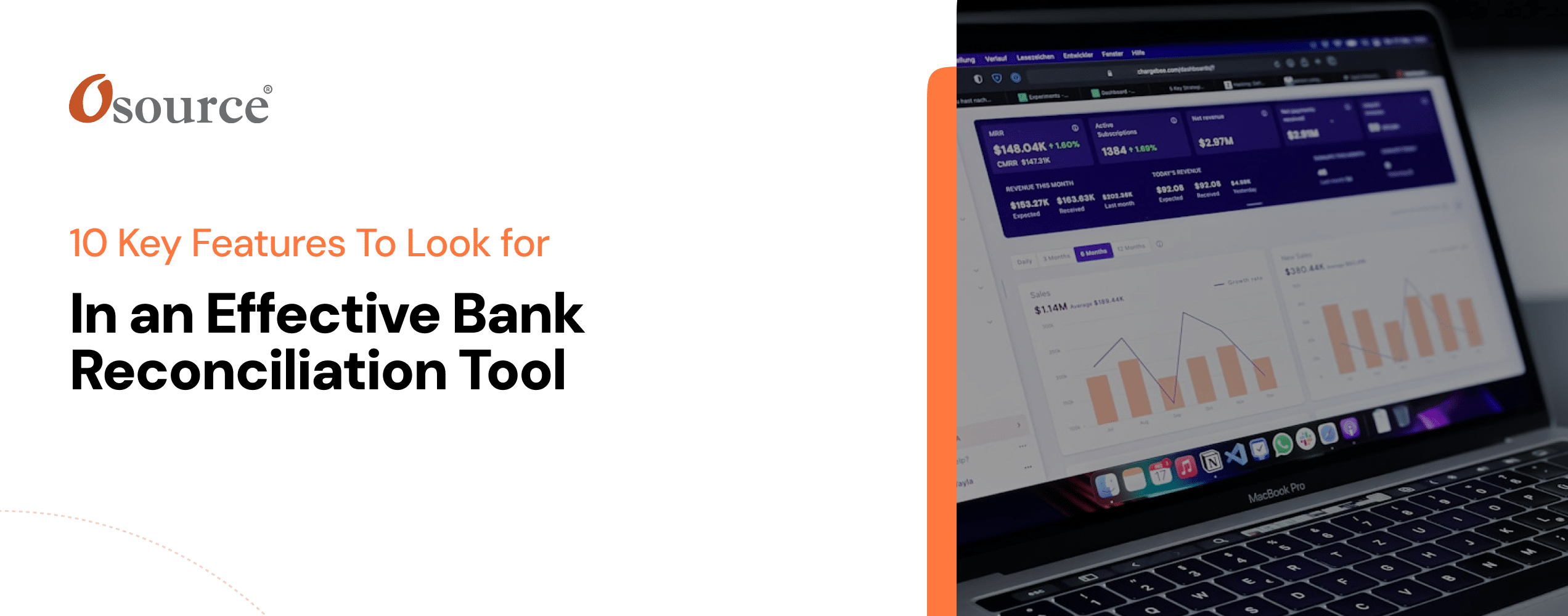
    10 Key Features to Look for in an Effective Bank Reconciliation Tool

    Table of Contents:

    Introduction

    Your company needs bank reconciliation, but doing it manually can be time-consuming and error-prone. A strong bank reconciliation tool takes the complexity out of the process by handling repetitive tasks automatically, cutting down the time your team spends on manual checks, and delivering results you can rely on. That means your people can stay focused on the parts of the business that drive real growth, without worrying about whether the numbers in the background are holding up. And when your workflows run efficiently  and errors stop slipping through, the impact shows up exactly where it matters- your bottom line.

    In this blog, we’ll walk you through the 10 key features to look for in a good bank reconciliation tool and explain how Onex Reconciliation by Osource Global can help streamline your financial processes and enhance efficiency.

    Understanding Bank Reconciliation Tools

    A bank reconciliation tool helps your business automatically compare your financial records with your bank’s transactions. This makes it easy to spot any differences between what you’ve recorded and what the bank shows, so you can fix them quickly.

    This tool is essential for modern businesses because it saves time and reduces mistakes. Instead of manually checking every transaction, the tool does it for you, ensuring everything matches up accurately. It also helps make your financial reporting more reliable, so you always have an up-to-date picture of your finances.

    In short, using a bank reconciliation tool makes your accounting work faster, more accurate, and less stressful giving you more time to focus on running your business.

    Key Features to Look for in an Effective Bank Reconciliation Tool

    1. Automated Bank Reconciliation

    Why it matters:
    Automation is the key to a modern, efficient financial workflow. Automated bank reconciliation eliminates the need for manual matching of transactions and reduces human error. This allows your team to focus on higher-level tasks, such as financial analysis and decision-making.

    Key Metrics to Track:

    • Percentage of reconciliation processes automated
    • Time saved per reconciliation cycle
    • Reduction in discrepancies and errors

    How to Improve:
    By integrating an automated bank reconciliation software like Onex Recon, you streamline your process, making it faster and more accurate. Be sure to monitor how the automation is implemented, ensuring that all processes are correctly configured. If automation workflows aren’t set up properly, they can introduce new issues, so it’s important to test and refine your setup regularly.

    2. User-Friendly Interface

    Why it matters:
    No matter how powerful the tool is, if your team can’t navigate it efficiently, the software becomes useless. A user-friendly interface ensures that employees can reconcile accounts quickly and accurately without extensive training or technical knowledge.

    Key Metrics to Track:

    • Time spent navigating and training staff
    • User satisfaction and feedback
    • Frequency of user errors

    How to Improve:
    Choose a bank reconciliation tool that offers an intuitive interface and easy navigation. Make sure it allows quick access to important features and provides a clean, simple layout to minimize the learning curve and reduce human error.

    3. Seamless Integration with Other Software

    Why it matters:
    Your bank reconciliation tool must integrate seamlessly with your existing accounting systems, ERP, and financial software. This integration ensures that data flows smoothly between systems, reducing the need for manual data entry and improving accuracy.

    Key Metrics to Track:

    • Number of successful integrations
    • Time saved by eliminating manual data entry
    • Accuracy of data transfer between systems

    How to Improve:
    Ensure your reconciliation tool offers robust integration capabilities with your current financial systems. Integration should be simple and ensure that data syncs in real time, making the entire process more streamlined and efficient.

    4. Real-Time Data Syncing

    Why it matters:
    In the fast-paced world of finance, having real-time data syncing is crucial. It ensures that your financial records are always up-to-date, so your team can make timely and informed decisions.

    Key Metrics to Track:

    • Speed of data syncing
    • Frequency of updates to financial records
    • Time to identify and resolve discrepancies

    How to Improve:
    Choose a bank reconciliation software that offers real-time syncing with your bank’s records. This will allow your team to reconcile accounts immediately as transactions occur, reducing delays and improving the accuracy of your financial reporting.

    5. Comprehensive Reporting Tools

    Why it matters:
    Clear and accurate financial reporting is essential for business decision-making. A good bank reconciliation tool should offer comprehensive reporting tools that help track reconciliation progress, identify discrepancies, and provide valuable insights into your financial data.

    Key Metrics to Track:

    • Number of reconciliation reports generated
    • Time spent reviewing reports
    • Accuracy of the reconciliation summaries

    How to Improve:
    Look for software that allows you to customize reports based on your business’s needs. This will give you a deeper insight into your financial operations and allow you to quickly pinpoint issues such as missing transactions or miscategorised entries.

    6. Security Features

    Why it matters:
    Security is paramount when dealing with financial data. A bank reconciliation tool must offer robust security features, including data encryption, two-factor authentication, and regular software updates to ensure that sensitive financial information is protected from cyber threats.

    Key Metrics to Track:

    • Frequency of security audits
    • Number of security incidents or breaches
    • Compliance with industry security standards

    How to Improve:
    Choose a reconciliation solution with built-in security features like end-to-end encryption, two-factor authentication, and regular updates. Ensure that the software complies with relevant industry security standards to protect your business’s financial information.

    7. Scalable Solution

    Why it matters:
    As your business grows, so do your financial needs. A scalable solution ensures that your bank reconciliation tool can handle increased transaction volumes and more complex reconciliation tasks without sacrificing performance.

    Key Metrics to Track:

    • Performance during high transaction periods
    • Capacity to handle increased workloads
    • Time needed to scale the solution

    How to Improve:
    When selecting a bank reconciliation tool, ensure that it can scale with your business. The tool should allow for more transactions, accounts, and users to be added seamlessly without affecting its functionality or speed.

    8. Cloud-Based Accessibility

    Why it matters:
    Cloud-based tools offer flexibility, enabling your team to access financial data and perform reconciliations from anywhere, at any time. This is particularly beneficial for businesses with remote teams or multiple office locations.

    Key Metrics to Track:

    • Access time and uptime of the system
    • Number of users accessing the system remotely
    • Frequency of remote reconciliation tasks

    How to Improve:
    Ensure your bank reconciliation software is cloud-based and offers secure, real-time access to your financial data. This will allow your team to work efficiently from any location and ensure that reconciliation can occur without geographical constraints.

    9. Multi-Currency Support

    Why it matters:
    If your business operates in multiple regions, having multi-currency support is essential. A tool that supports multiple currencies allows you to reconcile accounts in different currencies quickly and accurately, ensuring that foreign transactions are handled properly.

    Key Metrics to Track:

    • Number of currencies supported
    • Accuracy of currency conversion
    • Time spent reconciling multi-currency accounts

    How to Improve:
    Choose a bank reconciliation tool that offers robust multi-currency capabilities, including accurate currency conversion and support for various exchange rates. This will allow you to reconcile international transactions with ease.

    10. Customizable Settings

    Why it matters:
    Every business has unique financial processes. A customisable reconciliation tool allows you to tailor the software to meet your specific needs, whether it’s adjusting reconciliation workflows or modifying reporting formats.

    Key Metrics to Track:

    • Number of customisation features used
    • Time saved by customising workflows
    • User satisfaction with custom settings

    How to Improve:
    Opt for a bank reconciliation software that offers customisable settings, so it aligns with your specific reconciliation process. This flexibility allows you to optimize workflows, ensuring that the software works the way your team needs it to.

    How a Bank Reconciliation Tool Improves Financial Accuracy and Efficiency

    A bank reconciliation tool enhances your financial accuracy by automating the matching of transactions, reducing human error, and streamlining processes. This improves overall financial efficiency, ensuring that you close your books faster and make more informed decisions. By saving time on manual tasks and increasing accuracy, you can allocate resources to more strategic activities, ultimately driving better financial performance.

    Why Onex Reconciliation is the Right Solution for Your Business

    At Osource Global, we understand that efficiency and accuracy are essential to your business’s financial operations. Onex Reconciliation offers the ideal solution for automating your reconciliation process, providing powerful features like real-time data syncing, seamless integration, and customisable settings. It’s the best bank reconciliation software for businesses that want to save time, reduce errors, and optimize their financial workflows.

    Final Thoughts: Making Bank Reconciliation Work for You

    An effective bank reconciliation tool can transform your financial operations. With features like automation, scalability, and multi-currency support, your business will be able to streamline reconciliation, improve accuracy, and save valuable time.

    Looking for the right solution? Get in touch with us today to discover how we can help simplify your bank reconciliation process and optimize your financial workflows.

    FAQs:

    1. What is a bank reconciliation tool?
      A bank reconciliation tool automates the process of comparing and matching your financial records with your bank statements, reducing errors and saving time.
    2. How does Onex Reconciliation work?
      Onex Reconciliation automates the reconciliation process, offering real-time syncing, secure data handling, and seamless integration with existing accounting software.
    3. Why is automation important in bank reconciliation?
      Automation reduces manual errors, speeds up the reconciliation process, and ensures that financial data is always up to date.
    4. Can Onex Reconciliation handle multi-currency transactions?
      Yes, Onex Reconciliation supports multiple currencies, allowing you to reconcile accounts in different currencies accurately and efficiently.
    5. How does Onex Reconciliation improve financial efficiency?
      By automating reconciliation tasks and providing real-time updates, Onex Reconciliation saves time, reduces errors, and improves overall financial accuracy.

    HRMS Features Checklist: 10 Must-Have Capabilities Every Modern HR Team Needs

    Selecting a Human Resource Management System (HRMS) isn’t just a software decision, it’s a long-term investment in how your HR team operates. The right mix of features like centralised employee data, payroll integration, compliance controls, and workforce analytics  lays the groundwork for an HR function that can genuinely grow with your organisation.

    The problem most HR teams run into isn’t effort, it’s tools that were never built for the way modern workplaces run. Teams are spread across locations, compliance requirements differ across every region and role type, and employees today expect the same smooth digital experience at work that they get everywhere else.

    A well-built HRMS closes that gap by bringing everything into one place by automating the repetitive work, keeping compliance in check, and giving HR leaders the real-time visibility they need to focus on people rather than paperwork.

    This blog highlights ten essential capabilities every modern HRMS software must include.

    Why Getting Your HRMS Right Matters More Than Ever

    The expectations placed on HR have shifted. Compliance now spans multiple jurisdictions. Remote and hybrid work requires systems that function without physical presence. And leadership expects workforce data with the same reliability as financial reporting.

    Three changes define what organisations need from HRMS software today:

    1. Compliance has become multi-layered:
      Labour law, data privacy, payroll tax, and statutory reporting obligations overlap across geographies and change regularly. Manual tracking is too slow and too error-prone to keep pace.

    1. Distributed workforces are the new normal:
      Managing teams across locations means handling localised leave policies, multi-currency payroll, and remote attendance within a single system, not across separate tools.

    2. AI in HRMS has moved from marketing to practice:

      Platforms now deliver measurable results, reduced time-to-hire, early attrition signals, and automated compliance alerts, rather than just better-looking interfaces.

    The ten features below are what a capable HRMS needs to deliver against that reality.

    10 Essential HRMS Features Every HR Team Should Look For

    1. Centralized Employee Database

    What it is:
    A single system of record that stores employee master data (profile, job history, compensation, documents, statutory IDs, and lifecycle changes) in one place.

    Why it matters:
    Every HR process depends on clean employee data. When records sit across spreadsheets, email threads, and multiple tools, it creates silent failures, wrong payroll inputs, missing compliance documents, inconsistent reporting, and repeated admin work. A centralized database also becomes your governance layer: it helps control who can view or change sensitive fields (salary, personal IDs, disciplinary notes).

    What to look for:

    • Field-level permissions (not just HR vs non-HR)
    • Full audit trail of edits with timestamps + user attribution
    • Document version history and expiry tracking
    • Ability to manage multiple entities/geographies in one database

    How Onex HRMS helps :
    Maintains a unified employee database with user-attributed change logs, secure access controls, and lifecycle-linked documentation.

    2. Intelligent Onboarding and Offboarding Workflows

    What it is:
    Workflow automation for onboarding tasks (forms, documents, approvals, provisioning steps) and offboarding tasks (exit docs, asset return, access removal, final settlements).

    Why it matters:
    Onboarding is where employee experience starts and where process gaps show immediately. If approvals, documentation, or system access is delayed, productivity drops and early attrition risk increases. Offboarding is even more sensitive: delays in access revocation or missing compliance steps can become security and audit risks.

    What to look for:

    • Role-based onboarding checklists (different flows for contractors vs full-time)
    • Automated triggers (e.g., offer accepted → workflow starts)
    • Offboarding that connects to access management and final payroll steps
    • SLA tracking (what’s pending, who owns it, how long it’s stuck)

    How Onex HRMS helps:
    Provides configurable onboarding/offboarding workflows, automated routing for approvals, and structured compliance documentation checkpoints.

    3. Leave and Attendance Management

    What it is:
    A unified module that manages leave policies, accruals, holiday calendars, attendance capture, and approvals, feeding directly into payroll.

    Why it matters:
    Most payroll disputes start with attendance/leave mismatches. If attendance lives in one place and payroll inputs live elsewhere, month-end becomes a reconciliation exercise especially painful at scale. In multi-location teams, leave rules differ by region, contract type, and statutory entitlements, so configuration flexibility matters.

    What to look for:

    • Multi-policy support (different rules by location, department, and role type)
    • Conflict logic (overlapping leaves, statutory minimum enforcement)
    • Attendance methods for remote teams (geo, mobile, QR, shift-based tracking)
    • Payroll-ready integration (no manual consolidation)

    How Onex HRMS helps:
    Supports multi-jurisdiction leave setups, remote-friendly attendance capture, and direct payroll sync to minimise reconciliation overhead.

    4. Payroll Readiness and Integration

    What it is:
    HRMS capability to connect attendance, leave, compensation changes, statutory rules, and employee updates into payroll without manual handoffs.

    Why it matters:
    Payroll errors are often not calculation mistakes, they’re data timing issues. A salary revision approved mid-month but not reflected in payroll, a new joiner missing documentation, or attendance adjustments not captured. These issues create compliance exposure (incorrect deductions) and employee trust problems.

    What to look for:

    • Real-time sync for mid-cycle changes (not just month-end batch updates)
    • Statutory rule updates (tax, PF, insurance contributions)
    • Error logs and exception handling (what failed and why)
    • Multi-entity payroll readiness if you operate across units/locations

    How Onex HRMS helps :
    Automates payroll readiness with real-time sync across leave/attendance/compensation and supports statutory compliance handling.

    5. Performance Management and Goal Tracking

    What it is:
    Tools for goal setting, continuous feedback, appraisal cycles, and performance documentation linked to development and compensation planning.

    Why it matters:
    Annual reviews alone don’t help teams improve in real time. Modern performance management needs lightweight check-ins, clear goal visibility, and structured feedback. When performance data connects to learning and compensation planning, HR can spot patterns early—high performers at flight risk, teams with skill gaps, or engagement declines.

    What to look for:

    • Goal libraries (OKRs/KPIs), cascading goals across teams
    • Continuous feedback + check-ins (not only annual reviews)
    • Calibration workflows for fairness across managers
    • Performance insights connected to development and compensation planning

    How Onex HRMS helps:
    Supports goal tracking, feedback cycles, appraisal workflows, and analytics-led workforce insights tied to planning.

    6. Employee and Manager Self-Service

    What it is:
    A portal where employees manage routine requests (leave, payslips, documents, profile updates) and managers handle approvals and team visibility without HR acting as a middle layer.

    Why it matters:
    Self-service reduces HR ticket volume and speeds up employee experience. But what matters is not just having a portal, it’s having one that’s actually usable, especially on mobile for field teams or distributed workforces.

    What to look for:

    • Full mobile functionality (not a limited version)
    • Approval workflows with notifications and escalation logic
    • Document access with permissions (payslips, offer letters, tax forms)
    • Simple UX: fewer clicks, easy navigation

    How Onex HRMS helps:
    Provides a mobile-ready ESS/MSS experience for employee actions, approvals, and team dashboards in one platform.

    7. Built-In HR Compliance Controls

    What it is:
    Embedded compliance tracking policy acknowledgements, audit logs, statutory reminders, document expiry alerts, and compliance reporting.

    Why it matters:
    Compliance failures often happen quietly: missed document renewals, outdated statutory rate changes, untracked policy acceptance. Without automation, compliance becomes a stressful “audit-season activity” instead of a continuous state.

    What to look for:

    • Automated reminders for renewals and deadlines
    • Policy acknowledgement tracking with audit evidence
    • Regulatory updates: automatic vs manual configurations
    • Compliance reporting across multiple geographies

    How Onex HRMS help:
    Helps track statutory obligations, manages audit logs, triggers alerts, and generates compliance reports aligned with ongoing updates.

    8. Workforce Analytics and Real-Time Dashboards

    What it is:
    Dashboards that provide live visibility into headcount, attrition, attendance trends, performance patterns, payroll efficiency, and HR operations.

    Why it matters:
    The value of HR analytics is timing. Insights delivered a month late are less useful. Real-time dashboards help HR detect patterns early, such as team absenteeism spikes, early attrition signals, or workforce cost drift.

    What to look for:

    • Filterable dashboards (by department, location, tenure, role)
    • Exportable, leadership-ready reporting
    • Trend comparisons over time (not only snapshots)
    • Predictive insights if AI is included (attrition risk, engagement signals)

    How Onex HRMS helps:
    Offers real-time dashboards with analytics views for HR and managers, helping track workforce metrics and operational trends.

    9. Data Security and Role-Based Access

    What it is:
    Security controls that protect sensitive employee data through encryption, MFA, role-based permissions, and detailed access logs.

    Why it matters:
    HR data includes salaries, IDs, addresses, health details, and disciplinary records. Beyond compliance penalties, a data breach impacts employee trust and long-term employer reputation. Role-based access isn’t just “nice to have” it’s essential governance.

    What to look for:

    • Granular permissions (field-level or module-level)
    • Access logs (who viewed/exported what, when
    • Security certifications (ISO/SOC), plus practical controls in-product
    • Data retention controls aligned with policy and regulations

    How Onex HRMS helps:
    Built with strong security and auditability, with structured access control and compliance-ready logs.

    10. Scalability and Future-Ready Architecture

    What it is:
    A modular, cloud-based HRMS that can support more users, new geographies, new entities, and evolving HR processes without replacement.

    Why it matters:
    Many companies outgrow their HRMS not because it’s “bad,” but because it can’t handle complexity, multiple legal entities, region-specific compliance, new workforce models, acquisitions, and scaling headcount fast. Future-ready also means the platform can support AI capabilities as data maturity grows.

    What to look for:

    • Multi-entity, multi-country readiness
    • Modular expansion (add L&D, analytics, workflow layers later)
    • Proven scale references (companies that expanded after implementation)
    • Strong integration architecture (ERP, payroll, IAM, finance tools)

    How Onex HRMS helps:
    Designed to scale across regions and workforce types with modular capabilities and architecture that support evolving HR needs.

    Three Questions to Answer Before Shortlisting an HRMS

    Feature comparisons are only useful once the underlying requirement is clear. Before evaluating platforms, answer these three questions:

    •  Pain first – What specific problem are you trying to solve?

    Compliance gaps, payroll errors, and reporting overhead have different root causes and point toward different platform priorities. A clear problem statement makes vendor conversations faster and more productive.

    •  Size for tomorrow – What does your workforce look like in three years?

    A platform built for today’s headcount and single-entity structure may not support the geography mix, entity count, or employment model complexity you need later. Growth assumptions belong in the evaluation, not the post-implementation review.

    •    Test depth, not claims – Which integrations are genuinely non-negotiable?

    Payroll engines, ERP systems, and productivity tools need live, bidirectional integration  not periodic data exports. Ask for technical documentation and speak to reference customers who use the same integration stack.

    Choosing an HRMS That Supports Long-Term Growth

    The right Human Resource Management System (HRMS) isn’t just about digitising HR tasks. It brings employee data, workflows, and HR compliance into one place, helping HR teams work more efficiently as organisations grow.

    With modern HRMS software, teams can automate routine processes, gain better workforce insights, and manage distributed teams without relying on spreadsheets or disconnected tools.

    If you’re evaluating HRMS platforms, you can get in touch with Osource to see how Onex HRMS supports scalable and compliant HR operations.

    FAQ’s :

    1. What is a Human Resource Management System (HRMS)?

    A Human Resource Management System (HRMS) is software that helps organisations manage employee data, payroll, attendance, performance, and HR processes in one platform.

    2. What are the key features of HRMS software?

    Key features of HRMS software include employee data management, payroll integration, leave and attendance tracking, performance management, analytics, and HR compliance tools.

    3. How does AI in HRMS help HR teams?

    AI in HRMS helps automate HR tasks, analyse workforce data, predict attrition risks, and improve hiring and performance insights.

    4. What is an employee management system?

    An employee management system helps organisations manage employee records, attendance, payroll, and HR workflows through a single digital platform.

    5. How does HRMS software support HR compliance?

    HRMS software helps maintain HR compliance by tracking statutory requirements, storing employee records, and generating compliance reports for audits.

    5 Critical Background Verification Challenges in India and How to Overcome Them

    Table of Contents

    1. Introduction
    2. Delays in Background Verification
    3. Inaccurate or Incomplete Data
    4. Legal and Compliance Challenges
    5. Lack of Trustworthy Verification Vendors
    6. Identity Verification Issues
    7. Conclusion: Solutions to Overcome Background Verification Challenges

    Introduction

    Background checks help companies avoid the risks of hiring unqualified or dishonest employees, ensuring better quality hires, improved security, and regulatory compliance. Background verification is crucial to ensure a trustworthy, reliable workforce, particularly in India, where hiring challenges are often magnified by a large and diverse job market. 

    However, as organizations continue to expand and hire at scale, background verification comes with its own set of challenges. This blog highlights the 5 critical challenges faced by HR leaders and businesses in India, and offers practical solutions to overcome them.

    1. Delays in Background Verification

    The Challenge:

    A significant challenge in the background verification process is the delay that often occurs, which can extend the time taken to make a hiring decision. This is due to several factors, such as manual verification processes, vendor inefficiencies, or poor coordination between different stakeholders.

    Solution:

    To address delays, businesses should consider automating background verification processes. Leveraging real-time verification platforms and partnering with service providers who offer fast and efficient verification can help significantly reduce verification timelines.

    2. Inaccurate or Incomplete Data

    The Challenge:

    Inaccurate or incomplete data is a major hurdle in the verification process. Candidates may provide misleading information about their previous employment, education, or criminal history, which could compromise the accuracy of the background check.

    Solution:

    To combat this, HR teams should integrate with trusted and comprehensive data sources. Automated verification systems that cross-check information across multiple platforms can help ensure the data’s accuracy. It’s also essential to provide clear guidelines to candidates on the necessary documentation required for verification.

    The Challenge:

    Background verification in India is regulated by several laws, including the IT Rules of 2011 and Data Protection regulations. Businesses often face challenges in understanding and adhering to these legal frameworks, and non-compliance can lead to hefty fines and reputational damage.

    Solution:

    To address compliance issues, HR leaders must stay updated on the latest legal regulations related to background verification. Working with legal advisors and background verification providers who are well-versed in Indian labor laws can help mitigate these challenges. Ensuring compliance with data privacy laws like the Personal Data Protection Bill (PDPB) is also crucial.

    4. Lack of Trustworthy Verification Vendors

    The Challenge:

    Choosing the right background verification vendor is critical to ensure the integrity and reliability of the verification process. However, many businesses face difficulties in finding trustworthy vendors who meet their specific needs, leading to inconsistent verification results.

    Solution:

    HR leaders should invest time in vetting background verification providers thoroughly. Look for vendors with a proven track record, transparent processes, and reliable technology. Partnering with well-established background verification companies that understand the nuances of the Indian market can help businesses reduce verification risks.

    5. Identity Verification Issues

    The Challenge:

    Identity fraud is a persistent issue in India, where candidates may submit falsified identification documents. This can lead to disastrous consequences, such as hiring individuals who do not meet the qualifications or pose a security threat.

    Solution:

    To ensure accurate identity verification, companies must implement robust identity verification methods such as biometric checks, government-issued ID validation, and AI-powered tools that can cross-check identities against government databases. Using these tools can significantly reduce the risk of fraud and enhance the overall trustworthiness of the hiring process.

    Conclusion: Solutions to Overcome Background Verification Challenges

    Background verification in India comes with several challenges, including delays, inaccurate data, and compliance concerns. However, these obstacles can be addressed effectively by adopting automated systems, working with trusted vendors, and staying updated on legal regulations. Proactively addressing these challenges ensures faster hiring, greater compliance, and a more secure process for your organization.

    If you’re ready to streamline your background verification process, get in touch with Osource Global today. 

    FAQs

    1. Why is background verification important in India?

    Background verification helps employers confirm the legitimacy of a candidate’s qualifications, employment history, and identity, preventing fraud and mitigating hiring risks.

    2. What are the main challenges in background verification?

    Delays, data accuracy issues, legal compliance, vendor trust, and identity fraud are some of the critical challenges HR departments face during background verification.

    3. How can background verification be sped up?

    Automating the verification process and working with vendors that offer real-time verification can significantly reduce delays and speed up hiring decisions.

    4. What are the compliance requirements for background verification in India?

    India has specific legal requirements regarding data privacy and labor laws, including the IT Rules of 2011 and Personal Data Protection Bill, that companies must follow to remain compliant.

    5. How can identity verification be improved?

    Using biometric authentication and AI-powered tools can help ensure that candidates’ identities are authentic, reducing the risk of identity fraud.

    Unit No. 4, 5th Floor, B Wing, Phoenix House, High Street Phoenix, 462 S.B. Marg, Lower Parel (w) Mumbai - 400 013. India.

      How can we help?

      Finance And Accounting Services

      Human Resource Services

      B2B SaaS Solution

      Customize Solutions

      Your Details

      Name*

      Email*

      Phone number*

      Organization*

      Location*

      Select Enquiry Type*

      How can we help?*

      What is 6 x 3 ?

      By clicking submit you agree with the Privacy policy of Osource