X

    How can we help?

    Finance And Accounting Services

    Human Resource Services

    B2B SaaS Solution

    Customize Solutions

    Your Details

    Name*

    Email*

    Phone number*

    Organization*

    Location*

    Select Enquiry Type*

    How can we help?*

    What is 5 x 5 ?

    By clicking submit you agree with the Privacy policy of Osource

    Fractional CFO vs Full-Time CFO: Which Is Right for Your Company?

    As companies navigate evolving market conditions, the need for strong financial leadership is more important than ever. Choosing between a Fractional CFO and a Full-time CFO depends on your current business requirements, operational structure, and long-term growth plans. Each role brings distinct value, and understanding the difference is key to making a decision that supports your company’s financial health, structure, and strategic direction. In this blog, we will be understanding amongst a Fractional CFO and a Full-time CFO, which would be a correct choice 

    Defining the Roles: Fractional CFO and Full-Time CFO

    Fractional CFO

    A Fractional CFO is a contract-based financial leader who works with organizations on a part-time or project-specific basis. This model offers flexibility and is typically engaged when businesses require experienced input in budgeting, forecasting, or fundraising without hiring a permanent executive.

    Full-Time CFO

    A Full-time CFO is a permanent executive who becomes an integral part of the leadership team. They oversee all financial operations, help shape long-term strategy, and lead internal finance teams. This role is embedded within the company’s business hierarchy, with ongoing accountability and strategic involvement.

    Each type plays a distinct role in the overall financial management approach depending on the size, maturity, and type of company.

    Key Differences in Financial Strategy and Management

    Both roles support financial strategy, but the depth and delivery model differ significantly.

    • Strategic Scope: A Fractional CFO is often brought in to support targeted strategic needs, such as preparing for an audit, fundraising, or realigning financial reporting. A Full-time CFO drives strategy continuously and is involved in shaping company-wide direction.
    • Execution and Oversight: Fractional CFOs contribute through external advisory and project execution, while Full-time CFOs manage ongoing team performance, budgeting cycles, and reporting structures.
    • Level of Integration: Full-time CFOs are embedded in the internal culture and systems. Fractional CFOs maintain an external but aligned presence, making them efficient for agile planning but less involved in long-term internal development.

    Choosing between them depends on whether you need sustained financial management or targeted intervention with limited resource commitment.

    Impact on Operational Efficiency and Effectiveness

    Strong financial leadership directly contributes to operational efficiency and operational effectiveness.

    • Fractional CFOs streamline operations by applying external best practices, often introducing automation, short-term fixes, or policy frameworks that improve operational efficiency quickly.
    • Full-time CFOs take a deeper role in operational alignment, working with multiple departments to embed long-term financial control mechanisms. They build team capacity, refine workflows, and take ownership of ongoing performance.

    If your organization seeks rapid improvements with limited internal disruption, a Fractional CFO offers clear value. If your goal is to build a long-term system with cross-functional alignment, a Full-time CFO may be more appropriate.

    Cost, Commitment, and Business Requirements

    Cost and Time Commitment

    A Full-time CFO typically commands a six-figure salary, along with bonuses, stock options, and benefits. The recruitment process can take months. In contrast, a Fractional CFO works on a flexible, contract-based schedule—usually between 10 to 40 hours per month—at a significantly lower cost.

    Business Requirements

    For companies navigating funding, reorganization, or early growth, a Fractional CFO is a cost-effective choice. Larger organizations with established financial functions may require a Full-time CFO who can take on more integrated responsibilities.

    Cost structure and timeline are critical factors, especially when aligning with the business opportunities currently on the table.

    Leadership Opportunities and Growth Alignment

    As your company scales, the right CFO model can help unlock leadership opportunities and support broader growth opportunities.

    • A Fractional CFO helps position the company for key milestones like investment rounds or market entry by providing timely strategic guidance and financial credibility.
    • A Full-time CFO plays a longer game, mentoring internal talent, developing financial leaders, and shaping the finance function to match the company’s evolving complexity.

    Both roles support growth, but in different ways. The choice depends on whether you need short-term execution or long-term leadership development embedded into your team.

    Choosing Based on Type of Company and Business Strategy Planning

    Every type of company has its own pace of growth, internal maturity, and access to financial resources. Your choice should reflect your company’s structure and its readiness for business strategy planning.

    • Startups and early-stage companies benefit from Fractional CFOs who bring high-level insight without the cost of a full-time hire.
    • Mid-sized businesses facing complexity or expansion may prefer a hybrid model starting with a Fractional CFO before transitioning to full-time leadership.
    • Large enterprises with layered operations and investor relationships often require Full-time CFOs who can maintain continuous alignment across departments and regulatory environments.

    Align your choice with your business structure, available resources, and strategic priorities, not just current gaps.

    Conclusion 

    Choosing between a Fractional CFO and a Full-time CFO depends on your company’s stage, goals, and internal capacity. Each role brings strengths; one offers agility and focus, the other brings depth and continuity. When aligned correctly, both support financial growth, strategic clarity, and stronger operations.

    At Osource, we work closely with financial leaders, whether contract-based or permanent, to provide the tools and systems they need to deliver real results. From automation platforms to compliance-ready workflows, we support CFOs in building scalable, effective finance functions.

    Talk to our experts to find out how our solutions align with your business structure and financial leadership needs.

    FAQs

    What is the main difference between a Fractional CFO and a Full-time CFO?

    A Fractional CFO works part-time or per project on a contract basis, offering financial leadership without long-term commitment. A Full-time CFO is a permanent executive who manages all financial operations and teams continuously.

    Which model is more cost-effective for a growing company?

    A Fractional CFO is typically more cost effective for startups and small businesses that need strategic input without the cost of a full-time salary.

    How do both roles impact operational efficiency?

    Both roles improve operational efficiency, but in different ways. Fractional CFOs focus on fast, targeted improvements, while Full-time CFOs build deeper, long-term systems and controls.

    What type of company should hire a Full-time CFO?

    Established businesses with complex operations, internal finance teams, and long-term business strategy planning needs are better suited for a Full-time CFO.

    Can a Fractional CFO manage compliance and audits?

    Yes. Fractional CFOs often handle compliance, audit preparation, and reporting—especially when those needs are time-bound or linked to specific business events.

    What Is a Fractional CFO and How Can They Transform Your Business?

    In a business environment where agility and precision matter, companies are rethinking how they access senior financial leadership. A Fractional CFO offers organizations a cost effective, flexible way to gain financial expertise without committing to a full-time executive. This model is especially valuable for businesses looking to improve financial compliance, streamline decision-making, and align operations with long-term growth objectives. In this blog post, we will understand in depth about the term Fractional CFO and explore how it can help businesses to grow. 

    What is a Fractional CFO

    A Fractional CFO is a seasoned financial executive who works with organizations on a contract-based or part-time schedule. This model gives businesses access to financial expertise without the full-time cost or commitment typically associated with executive hires.

    These professionals are brought in during periods of change, growth, or financial complexity. Whether it’s for fundraising preparation, budgeting oversight, or compliance management, a fractional CFO provides strategic support that fits the company’s needs and pace.

    Role of a Fractional CFO

    The role of a Fractional CFO centers around delivering strategic financial leadership in a focused, time-efficient way. Instead of managing daily operations full-time, they contribute through high-impact financial strategies and consultative leadership.

    They work closely with executive teams to provide visibility into financial performance, assess operational risks, and help guide decisions around investments, costs, and growth planning. Their presence is especially useful in organizations where financial roles are still evolving but strategic guidance is already essential.

    Fractional CFOs also support internal teams by establishing financial systems and ensuring that the organization meets financial compliance and regulatory compliance requirements without delays or disruptions.

    Core Responsibilities of a Fractional CFO

    A Fractional CFO takes on responsibilities that go beyond routine accounting or compliance. Their focus is on strengthening the company’s financial position through structured planning, performance analysis, and informed decision-making. Whether supporting growth, managing risk, or driving financial visibility, their role is defined by outcomes, not hours. If we further understand that their responsibilities revolve around: 

    Financial Strategies and Forecasting

    They create multi-quarter or multi-year financial strategies that align with business objectives. These plans often guide investment decisions, operational costs, and resource allocations.

    Financial Budgeting

    Fractional CFOs define, implement, and monitor budgeting processes. They ensure each department’s financial targets are realistic, measurable, and aligned with company goals.

    Performance Analytics

    They analyze revenue trends, cost patterns, and efficiency metrics to uncover what’s driving or slowing down financial performance. This enables leaders to respond with informed decisions.

    Compliance

    They ensure the company follows all applicable tax, accounting, and financial reporting regulations. This includes regulatory compliance across jurisdictions, especially during audits or external reviews.

    Strategic Decision Making

    Fractional CFOs bring financial insight into strategic discussions, whether it’s market expansion, capital expenditure, or partnerships. They ground decisions in financial viability and risk awareness.

    Risk Management

    They help identify areas of financial risk and recommend mitigation plans. This might include operational risks, cash flow vulnerabilities, or compliance exposures that could affect business stability.

    How Fractional CFOs Drive Business Efficiency and Efficacy

    Fractional CFOs strengthen both operational processes and strategic clarity. Their influence directly improves the company’s business efficiency, how well resources are used, and business efficacy, how well strategic goals are achieved.

    Aligning spending with outcomes

    They make sure spending is tied to growth and productivity, not just historical habits or assumed needs. This maximizes return on investment across teams.

    Establishing measurable financial benchmarks

    By creating key performance indicators (KPIs), they give leadership a clearer view of what success looks like and where adjustments are needed.

    Enabling faster decision-making

    Access to real-time financial insight reduces bottlenecks and enables confident, informed choices. This helps avoid missed opportunities or slow reactions to market changes.

    Strengthening internal financial control

    They introduce workflows and structures that prevent revenue leakage, ensure data accuracy, and support internal accountability at all levels.

    Business Automations That Support Fractional CFOs

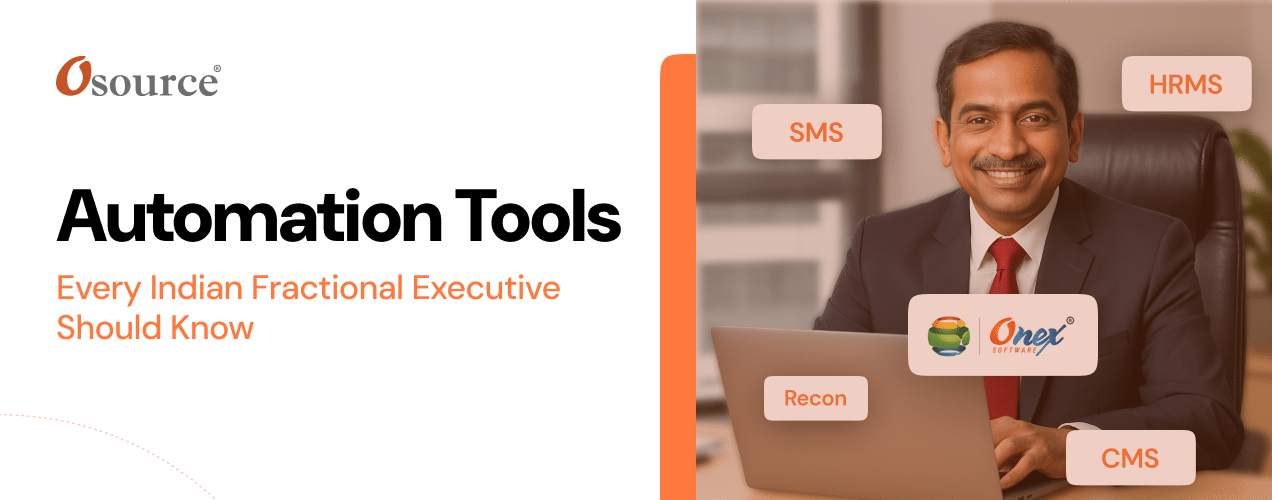
    Today’s CFOs don’t rely on manual spreadsheets alone. Tools that support automation, analytics, and compliance are central to their effectiveness. At Osource, we’ve developed automation platforms specifically suited to the needs of part-time and project-based finance leaders.

    Onex Flow

    Onex Flow is a platform that digitizes manual workflows and ensures process-level financial compliance. It allows finance leaders to approve, track, and optimize business processes through a centralized, paperless system.

    Onex Recon

    Onex Recon is designed for high-volume businesses. This tool automates complex reconciliation tasks. It improves data accuracy and reduces time spent on error checking or manual reviews.

    Onex SMS

    Onex SMS is a solution that streamlines procure-to-pay cycles, from vendor selection to invoice clearance. CFOs can maintain control over spend and enforce approval hierarchies without delays.

    Onex CMS

    Onex CMS  is a tool that has predefined contract templates and a digital storage system. This tool supports CFOs in managing financial agreements. It ensures that contractual obligations are fulfilled and audit trails are always accessible.

    With the right business automations in place, a Fractional CFO can shift focus from administrative tasks to strategic work. This creates room for strategic leadership without adding headcount or overhead.

    Conclusion 

    A Fractional CFO brings structured financial thinking, accountability, and planning to organizations that are growing or undergoing change. Their financial management expertise becomes especially valuable when stakes are high but resources are still limited.

    Through tools like the Onex, we support these professionals in creating more accurate forecasts, maintaining financial compliance, and executing on cost-effective strategies for growth.

    If your organization is ready to bring more structure to its financial processes, explore our technology and service capabilities designed for flexible financial leadership.

    Talk to our experts to learn how we can help you build a stronger, more agile finance function.

    FAQs

    What is the difference between a Fractional CFO and a traditional CFO?

    A Fractional CFO works part-time or on a project basis, offering executive-level financial leadership without a long-term employment contract. A full-time CFO is a permanent executive with ongoing internal responsibilities.

    Can a Fractional CFO handle regulatory compliance?

    Yes. They manage tax, audit, and reporting requirements, ensuring the business remains compliant across jurisdictions and industry standards.

    Is a Fractional CFO suitable for early-stage businesses?

    Absolutely. Many startups and growing companies engage them during product launches, funding rounds, or when setting up budgeting and accounting systems.

    How do business automations support Fractional CFOs?

    Automation tools reduce the burden of repetitive tasks like reconciliation, invoice approvals, and reporting. This allows CFOs to focus on planning, strategy, and stakeholder communication.

    How long does a Fractional CFO usually work with a business?

    Engagements can range from a few months to over a year, depending on the complexity of the company’s needs and the scope of the project.

    How Personnel Management Software Streamlines Employee Lifecycle Tracking

    Tracking the employee lifecycle is central to building a consistent and compliant HR operation. As businesses scale, manually managing key employee milestones onboarding, payroll, performance reviews, and offboarding becomes increasingly inefficient. Without a structured system in place, HR teams risk data silos, compliance gaps, and delays in critical processes.

    Personnel management software addresses these issues by automating and standardizing workflows across the entire lifecycle. It ensures that employee records, tasks, approvals, and compliance-related updates are accessible, auditable, and consistent. In this blog post, we will understand how effectively personnel management software streamlines employee lifecycle tracking 

    What Is Personnel Management Software?

    Personnel management software is a digital platform that helps HR teams manage employee information, tasks, and events from the moment someone joins to the point they leave the organization. It goes beyond simple HR recordkeeping to include modules for:

    • Employee onboarding
    • Payroll processing
    • Performance management
    • Compliance management
    • Training and development
    • Exit procedures and offboarding

    Unlike standalone employee onboarding software, this system is designed to manage the employee lifecycle as a unified flow. It integrates with other tools, ensuring data consistency across HR, finance, and compliance functions.

    Key Stages of the Employee Lifecycle and How Software Enhances Each

    Employee Onboarding

    Personnel management software automates onboarding workflows such as document collection, digital signing, policy acknowledgment, and IT access setup. This reduces onboarding time, minimizes manual errors, and ensures every new hire starts with a clear, consistent process.

    Role Changes and Internal Movements

    Tracking promotions, departmental transfers, and responsibility shifts is easier with a centralized system. The software ensures that job history, performance data, and updated compensation are reflected in real time supporting structured employee lifecycle management.

    Performance Tracking

    Built-in performance management features allow HR teams to capture feedback, set goals, and conduct periodic appraisals. With access to performance analytics, organizations can evaluate progress over time and identify both high-performing employees and areas for development.

    Payroll and Benefits Administration

    Integrated payroll management features help process salary, incentives, and benefits without needing to switch between systems. The software automates calculations, applies local statutory rules, and ensures accuracy in Employee CPF contributions and deductions. This is especially important in regions with strict payroll compliance like Singapore.

    Exit and Offboarding

    When an employee leaves, the system manages final payouts, knowledge transfers, and system deactivation. This ensures that no loose ends are left in the process, and that all records remain intact for reporting and future compliance analytics.

    Choosing the Right Personnel Management Software

    Selecting the right system depends on the scale, regulatory environment, and internal processes of your organization. Consider tools that:

    • Support end-to-end employee lifecycle tracking
    • Include native compliance management features
    • Handle both payroll processing and time tracking
    • Provide integration with your existing HR tech stack
    • Offer insights through built-in recruitment analysis and performance data

    A well-designed platform will reduce redundancy, cut administrative time, and improve data visibility across departments.

    How Osource Can Help You 

    At Osource, we support organizations in streamlining the employee lifecycle through a combination of advanced HR technology and process-driven outsourcing. Our solutions are designed to reduce manual workload, improve compliance accuracy, and give HR teams the tools they need to operate at scale whether managing a local workforce or a distributed team across Southeast Asia.

    Onex HRMS: Technology Built for Lifecycle-Driven HR

    Our proprietary platform, Onex HRMS, is a fully integrated personnel management software designed to automate and manage the entire employee journey. It offers the flexibility, control, and visibility needed to support each phase of the employee lifecycle, including:

    • Employee onboarding: Automates workflows, document collection, welcome communications, and system access. 
    • Performance management: Tracks objectives, feedback, and appraisals with built-in performance analytics for better decision-making.
    • Payroll management: Ensures accurate, compliant processing of salaries, benefits, reimbursements, and Employee CPF contributions.
    • Compliance management: Keeps pace with changing labor regulations and supports audit-ready documentation.
    • Exit management: Manages final settlements, exit formalities, and updates to access rights, ensuring complete lifecycle closure.

    With Onex, HR teams gain a centralized, real-time view of all employee data and processes. The platform is configurable, scalable, and designed to support evolving organizational structures and compliance landscapes.

    Human Resource Outsourcing (HRO): Expert-Led Operational Support

    For organizations that prefer to offload HR functions while maintaining oversight, our HRO services offer dedicated support for critical functions. We operate as an extension of your HR team, managing operational tasks with accuracy and consistency.

    Our HRO offerings include:

    • Payroll processing and statutory compliance management
    • End-to-end support for employee lifecycle management, from onboarding to exit
    • Handling of documentation, claims, and statutory reports
    • Monitoring of leave, attendance, and timekeeping data
    • Regular updates on compliance changes and support for compliance analytics

    By combining Onex HRMS with our HRO expertise, we provide clients with a unified solution that balances technology with hands-on operational support. This enables HR leaders to focus on strategic tasks such as workforce planning, retention, and engagement while we ensure the back-end functions run smoothly and in full compliance.

    Whether you are scaling a team, updating your internal processes, or looking for ways to optimize your employee lifecycle tracking, Osource delivers the flexibility, tools, and service depth required to support your goals.

    Conclusion 

    Managing the employee lifecycle without automation creates avoidable risks and inefficiencies. As organizations grow, manual tracking of onboarding, payroll, performance, and exits becomes unsustainable. Personnel management software brings structure, compliance, and clarity to every stage of the employee journey.

    To see how Osource can support your HR transformation with tools and outsourced services that fit your business needs, get in touch with our team for a personalized consultation.

    HR Software Adoption in Southeast Asia: Trends and Opportunities for Singapore-Based Teams

    Across borders and workforce expectations change, teams are investing in smarter ways to manage talent, compliance, and operations. Singapore, in particular, is positioned at the center of this transformation.

    HR software is no longer a back-office convenience. It’s a foundational part of business operations, used to streamline employee data, automate routine tasks, and enable strategic decision-making. With rising pressure to improve efficiency, ensure compliance, and deliver better employee experiences, adoption of modern HR systems is accelerating, especially among Singapore-based teams leading regional operations. In this blog, we will understand what are the HR Software Adoption trends and opportunities are in the Singapore region. 

    Understanding HR Software: Core Functions and Modern Capabilities

    HR software encompasses a range of digital tools designed to automate and manage key HR functions. At its core, it helps teams stay organized, compliant, and responsive as business needs evolve.

    Modern HR software typically includes features like:

    • Payroll processing: Managing salary calculations, tax deductions, CPF contributions, reimbursements, and final settlements.
    • Employee Lifecycle Management: Supporting every stage from onboarding to exit, including training, appraisals, promotions, and leave tracking.
    • Recruitment automation: Streamlining candidate sourcing, interview scheduling, and offer management.
    • HR system software: Acting as the centralized platform for employee data, workflows, and compliance checks.
    • AI integration: Supporting tasks like candidate screening, policy automation, and sentiment analysis.
    • Performance analytics: Giving managers insights into workforce productivity, engagement, and attrition trends.

    What sets modern HR tools apart is the ability to scale across departments, roles, and geographies, making them essential for Singapore-based teams managing operations in multiple Southeast Asian countries.

    Key Trends Driving HR Software Adoption in Singapore

    Singapore’s HR ecosystem is shaped by high regulatory standards, diverse workforces, and rapid digital transformation. Several trends are accelerating HR software adoption in this market:

    Cloud-first, mobile-ready platforms

    HR teams are moving away from on-premise solutions toward cloud-based systems that are easier to deploy, maintain, and access remotely.

    Integration of payroll and compliance

    Managing Employee CPF contributions and Employer CPF contributions is a top priority. Businesses are seeking payroll solutions that ensure accuracy and compliance with Singapore’s evolving financial regulations.

    Demand for automation and speed

    Manual processes delay onboarding, payroll, and performance cycles. Teams now prioritize payroll processing services and employee payroll services that reduce time spent on data entry and approval chains.

    Use of performance and recruitment data

    With access to performance analytics and recruitment analysis, HR leaders can identify gaps in hiring, engagement, and retention, and take informed action.

    Vendor consolidation

    Companies want unified platforms that handle everything from business payroll services to leave tracking, reducing the need for separate tools or service providers.

    The Singapore Advantage: Strategic Opportunities for Local Teams

    Singapore’s environment provides several advantages for HR leaders investing in digital solutions.

    Supportive policy landscape

    Government programs such as the Productivity Solutions Grant (PSG) help businesses adopt digital HR tools with partial funding. This lowers the barrier for small and mid-sized businesses.

    Regional leadership

    Many companies based in Singapore are responsible for overseeing operations across Southeast Asia. This makes it essential to adopt HR software that can handle multi-country payroll, local labor laws, and decentralized teams.

    Strong compliance focus

    Singapore-based teams often face stricter audit, CPF, and tax filing requirements. Using reliable payroll service providers helps avoid penalties and ensures timely contributions.

    Scalability and cost efficiency

    Investing in a platform that combines online payroll services, employee data, and lifecycle management reduces long-term costs and improves accuracy.

    Use Cases: How Singapore-Based Teams Are Leading the Change

    Several organizations in Singapore have adopted HR systems that align with their operational goals and workforce needs. Common results include:

    • Reduced processing time for payroll and leave approvals
    • Improved visibility into talent gaps using built-in recruitment analytics
    • Fewer compliance errors tied to CPF and tax submissions
    • Streamlined onboarding using integrated workflows in a single HR system software platform

    In industries like financial services, logistics, and tech, digital HR solutions are becoming the default, not the upgrade.

    How Osource Can Help

    Osource supports HR transformation through its platform and managed services, tailored for companies across Southeast Asia. Our suite includes:

    • Onex HRMS: A robust, scalable HR software platform that automates workflows, supports escalations, and maintains audit-ready records.
    • Payroll processing: We handle full-cycle payroll processing services, including Employee Payroll Services, CPF management, tax sheets, and final settlements.
    • Employee Lifecycle Management: Our solution covers onboarding, confirmation, leave, training, promotion, appraisal, and exit, all in one platform.
    • Compliance services: Our team manages updates across labor laws and ensures that CPF and other statutory filings are up to date.
    • Digital P-File management: Digitizing employee documents to reduce manual effort and improve data access.

    By combining software with regional HR expertise, we help Singapore-based teams improve efficiency, reduce risks, and support strategic business growth.

    Conclusion 

    Singapore teams are at the forefront of HR innovation in Southeast Asia. With rising complexity in workforce management and a greater emphasis on compliance, the need for modern HR software has never been clearer.

    The right platform not only reduces manual work, it improves compliance, supports employee engagement, and enables smarter decisions with real-time data.

    To explore how Osource can support your HR transformation, contact us.

    HRMS 2.0 vs. HRMS 4.0: What’s the Right Fit for Your Enterprise Today?

    Understanding the Evolution of HR Technology

    Enterprise HR technology has shifted from record-keeping systems to platforms that support strategic workforce planning, compliance, and operational agility. Early human resource management systems were designed to track personnel data. Over time, HR platforms evolved into more integrated tools offering payroll management, attendance, and compliance tracking.

    The introduction of HRMS 2.0 brought more structured automation, enabling organizations to handle core HR systems such as employee records, leave, and payroll more efficiently. However, changing workforce dynamics, distributed teams, and stricter compliance demands have accelerated the need for intelligent, flexible systems.

    This shift has laid the groundwork for HRMS 4.0 a generation of systems designed for enterprises looking to scale, digitize processes, and adopt AI-driven insights.

    What is HRMS 2.0?

    Core Features and Limitations

    HRMS 2.0 refers to the second generation of HR platforms that emerged as organizations moved away from manual, paper-based systems. These platforms focused on digital storage, standardized workflows, and basic automation.

    Typical features included:

    • Centralized employee management system

    • HR payroll software for basic calculations and statutory deductions

    • Attendance and leave tracking

    • Basic HR compliance reports

    While HRMS 2.0 improved administrative efficiency, it had limitations in areas like user experience, data visibility, and integration. These systems were often on-premise or partially hosted, making upgrades and scaling more complex.

    As workforce expectations evolved, the need for a modern HR system that supports payroll compliance, real-time analytics, and adaptable workflows became clear.

    What Defines HRMS 4.0?

    Capabilities of a Modern HRMS

    HRMS 4.0 represents the next phase of enterprise-ready HR management systems platforms built to handle scale, complexity, and intelligent decision-making. These systems are typically cloud-based HRMS platforms, offering flexibility, speed, and reduced maintenance overhead.

    Core capabilities include:

    • Modular, API-friendly architecture

    • AI in HRMS for predictive insights, workforce planning, and engagement analysis

    • Integrated payroll system with automated statutory updates

    • Workflow-driven compliance software

    • Mobile-first employee experiences

    • Role-based dashboards and HR analytics

    A modern HRMS enables faster onboarding, improved payroll management, and data-driven financial decisions at the HR level. It connects multiple functions—payroll, compliance, performance, and analytics into a unified system that supports enterprise agility.

    HRMS 2.0 vs. HRMS 4.0: Key Differences

    Category HRMS 2.0 HRMS 4.0
    Architecture Often on-premise or semi-hosted Fully cloud based HRMS
    Functionality Basic employee management software, leave, payroll Full-suite HRIS platform with modular expansion
    Compliance Manual updates and tracking Built-in payroll compliance and automated alerts
    Integration Limited third-party integration Open API support for ERP, CRM, and productivity tools
    User Experience Static workflows Dynamic, role-specific interfaces
    Automation Task-level Process-wide, with AI in HRMS for decision support

    For growing enterprises, the move from HRMS 2.0 to HRMS 4.0 is not about upgrading software it’s about building an infrastructure that aligns with evolving business needs, workforce models, and regional compliance expectations.

    How to Know Which HRMS Model Your Enterprise Needs

    Enterprises should evaluate their current HR operations against strategic goals, scalability, and compliance risk. If your organization faces challenges like manual data entry, delayed payroll cycles, or audit gaps, it may be operating on an outdated HRMS platform.

    Signs it may be time to transition:

    • Your HRIS software lacks real-time dashboards

    • Compliance processes are manual or fragmented

    • Your team spends too much time on repetitive tasks

    • You need better control over distributed workforce management

    • Reporting and analytics are not available on demand

    A future-ready HR and payroll management software should support seamless updates, global payroll standards, and end-to-end visibility. Choosing between HRMS 2.0 and HRMS 4.0 depends on your digital readiness and how you prioritize integration, automation, and long-term cost-efficiency.

    How Osource Supports Future-Ready HR Transformation

    At Osource, we help enterprises move beyond legacy systems and adopt HR technology that’s built for performance, compliance, and scale. Our HRMS platform offers features that combine automation, real-time insights, and configurable workflows designed to align with your organization’s pace of growth.

    Our platform includes:

    • A flexible, cloud-based HRMS designed to manage employee data across multiple locations.

    • Integrated compliance tools to streamline statutory and audit processes.

    • HR payroll software with integrated support for local wage policies and regulations.

    • AI-enabled tools for recruitment, onboarding, and workforce planning

    • Configurable modules for learning, performance, and expense management

    We focus on helping clients achieve greater process control while simplifying complex HR management system tasks. Whether you’re operating on HRMS 2.0 or transitioning to a modern HRMS, our team brings the tools and expertise to support that evolution.

    Conclusion

    Choosing between HRMS 2.0 and HRMS 4.0 depends on where your enterprise stands in terms of workforce complexity, digital maturity, and operational goals. For organizations focused on growth, agility, and compliance, upgrading to a smarter, AI-driven system offers clear operational and strategic benefits.

    A CFO’s Guide to Outsourcing AR Management for Scalable Finance Operations

    In today’s fast-moving business landscape, CFOs are expected to deliver financial accuracy, support strategic decision-making, and drive operational efficiency, all while managing limited resources. One area under growing scrutiny is accounts receivable (AR) management, which directly influences cash flow, compliance, and overall finance operations. As companies scale, maintaining control over receivables becomes more complex and resource-intensive. This blog explores how outsourcing AR functions can help CFOs streamline processes, improve visibility, and build a more agile, performance-driven finance organization.

    What Does Effective AR Management Involve?

    Accounts receivable (AR) management plays a critical role in finance operations. It directly impacts cash flow management, financial accuracy, and the overall health of the balance sheet. When done well, AR management helps ensure predictable income, minimizes bad debt, and maintains strong customer relationships.

    Effective AR management involves more than just tracking invoices. It includes setting clear payment terms, streamlining payment processing, actively following up on overdue accounts, and maintaining accurate records for financial compliance. For finance planning to be meaningful, organizations need consistent visibility into receivables and reliable data that drives confident financial decisions.

    CFOs who prioritize operational efficiency in AR create processes that allow for quicker dispute resolution, cleaner reconciliations, and shorter Days Sales Outstanding (DSO). These improvements create measurable outcomes in both financial management and team productivity.

    Benefits of Outsourcing AR Functions

    Outsourcing AR functions gives finance teams access to advanced tools, specialized expertise, and performance-driven processes, all while maintaining control and visibility. For CFOs, it’s not just about delegating tasks; it’s about improving the core mechanics of financial operations.

    1. Improved Financial Accuracy
      Outsourced teams follow structured workflows with multiple levels of verification, which minimizes data entry errors and reconciliation issues. This attention to detail ensures more reliable reporting and supports overall financial accuracy in statements and compliance documentation. 
    2. Accelerated Payment Processing
      Outsourcing enables faster invoice generation, automated follow-ups, and timely escalation of misconduct. This leads to quicker collections and a stronger receivables position. As a result, businesses benefit from enhanced cash flow and reduced revenue leakage. 
    3. Greater Operational Efficiency
      Outsourced AR providers operate with well-defined service level agreements (SLAs), KPIs, and performance benchmarks. Their process maturity translates into more efficient workflows, fewer delays, and increased transparency. It reduces friction between departments and allows internal finance operations to function with greater precision. 
    4. Scalable Support for Growth
      Business growth often leads to increased transaction volumes and more complex customer engagements. Outsourcing partners are built to scale, providing additional resources, updated technology, and extended hours without straining internal capacity. 
    5. Real-Time Data for Finance Planning
      Many outsourcing providers offer integrated dashboards that deliver real-time insights into payment status, aging reports, dispute resolution metrics, and customer behavior. This information enables CFOs to take a proactive approach, allowing them to make informed financial decisions with greater confidence. 
    6. Compliance-Driven Processes
      With increasing scrutiny on financial operations, maintaining rigorous compliance is non-negotiable. Outsourcing firms bring industry-specific knowledge and standardized practices that help meet regulatory and reporting requirements consistently. 
    7. Refocused Internal Teams
      By shifting time-consuming tasks to a specialized provider, internal finance teams can focus on strategic responsibilities such as budgeting, investment analysis, and risk management. This helps CFOs align financial management practices with long-term organizational objectives. 

    Why CFOs Are Turning to Outsourcing

    CFOs are navigating an increasingly complex business environment where finance operations are expected to be agile, accurate, and strategically aligned with broader organizational goals. The traditional in-house AR models often fall short when it comes to handling the scale, speed, and specialization required in modern finance operations. Below are some of the reasons for CFO’s to focus on outsourcing 

    1. Rising Operational Complexity
      Multi-entity structures, global customer bases, and diverse revenue streams introduce layers of complexity that standard AR processes aren’t built to handle efficiently. CFOs face the challenge of maintaining consistency in billing cycles, dispute resolution, and reporting across geographies. Outsourcing allows for process standardization and expertise that can handle this operational complexity at scale. 
    2. Demand for Automation and Digital Transformation
      Manual AR processes are time-consuming and error-prone. Outsourcing partners often come equipped with pre-integrated platforms, AI tools, and process automation capabilities, offering faster deployment and reduced internal IT burden. 
    3. Talent Shortages and Cost Pressures
      Recruiting and retaining skilled AR professionals is increasingly difficult, especially in competitive or cost-sensitive markets. Outsourcing provides access to experienced specialists without the overhead of recruitment, training, and retention. It also helps CFOs manage costs through predictable, outcome-based pricing models. 
    4. Enhanced Need for Cash Flow Management
      CFOs face ongoing demands to maintain liquidity while making informed financial decisions based on reliable data. Outsourced AR teams typically implement rigorous follow-up mechanisms, escalation protocols, and real-time dashboards that give better visibility into incoming payments and overall cash flow management. 
    5. Compliance and Risk Mitigation
      Outsourcing reduces the risk of non-compliance with evolving regulatory standards. External providers typically operate with built-in checks and controls that support financial compliance, data privacy, and audit readiness, relieving internal teams of that burden. 
    6. Shift Toward Strategic Finance
      As finance departments become more strategic, CFOs need to allocate internal resources toward high-value activities like forecasting, scenario modeling, and long-term finance planning. Outsourcing non-core functions like AR management enables this shift without sacrificing performance. 

    The Future of AR: Automation + Human Expertise

    The future of AR management is rooted in the combination of technology and skilled oversight. As finance operations adopt more digital tools, automation and digital transformation will become central to scalable AR strategies.

    Automation handles routine tasks like invoice generation, payment reminders, and data entry, while finance professionals focus on exception handling, strategic client communications, and continuous process improvement. This blend delivers improved financial accuracy and makes compliance more manageable.

    Tools that offer real-time dashboards, predictive analytics, and AI-powered workflows help CFOs make timely and informed financial decisions. Automation alone doesn’t solve every challenge, but when paired with AR experts, it drives long-term performance and cash flow visibility.

    How Osource Can Help

    At Osource, we deliver comprehensive AR outsourcing solutions backed by robust technology and deep domain expertise. Our services are designed to help CFOs simplify finance operations, improve cash flow management, and drive financial accuracy while maintaining full visibility and control. With Osource, we can: 

    1. End-to-End AR Management with Onex Flow
      Our Onex Flow platform supports seamless AR operations, covering everything from invoice processing and payment tracking to automated customer follow-ups. It standardizes workflows and ensures that every receivable is actively managed and reconciled, improving both operational efficiency and cash flow predictability. 
    2. Real-Time Reconciliation Using Onex Recon
      We use Onex Recon to automate and streamline the reconciliation process. This tool enhances financial accuracy by matching payments to receivables with precision, reducing manual errors and enabling quicker closings. It also helps ensure financial compliance by maintaining clear audit trails and documentation. 
    3. Smart Communication with Onex SMS
      Communication is central to timely collections. Our Onex SMS solution automates payment reminders, follow-ups, and escalation notices, improving customer engagement and reducing overdue balances. This contributes directly to improved cash flow management and fewer delays in payment processing. 
    4. Centralized Control Through Onex CMS
      Our Onex CMS provides a unified view of your receivables portfolio. It enables CFOs and finance teams to monitor disputes, track resolution statuses, and generate custom reports. With real-time insights, finance planning becomes more data-driven and aligned with business goals. 
    5. Industry Expertise and Scalable Delivery
      With over 20 years of experience, we bring deep knowledge of finance operations across various sectors. Our team adapts to your internal policies while maintaining external process consistency. Whether you’re managing high volumes or entering new markets, our services scale in step with your business. 
    6. Compliance-Driven Workflows and Reporting
      We build compliance into every layer of our service from initial setup to daily operations. Our platforms support audit-ready documentation, regulatory reporting, and governance controls that align with both local and international standards. 
    7. Outcomes That Drive Financial Decisions
      By combining our outsourcing expertise with intelligent platforms, we help CFOs achieve measurable improvements in DSO, working capital, and team productivity. Our clients gain more time for strategic financial management, deeper visibility into performance, and the tools they need to make confident, timely financial decisions.


    Conclusion

    As finance teams take on broader strategic responsibilities, streamlining core processes like AR management becomes essential to maintaining control, improving agility, and supporting long-term growth. Outsourcing accounts receivable functions offers CFOs a practical way to address operational complexity, enhance financial accuracy, and strengthen overall finance operations without overextending internal resources.

    At Osource, we bring structure, scale, and technology to AR processes through a focused approach and purpose-built platforms like Onex Flow, Onex Recon, Onex SMS, and Onex CMS. Our goal is to help CFOs build finance operations that are both efficient and resilient, ready to support the next stage of growth.

    Contact us to learn how we can support your finance transformation goals with tailored outsourcing solutions.


    HR Management Software for Growing Businesses | Osource Global

    As businesses undergo business expansion, managing HR processes manually becomes inefficient and prone to errors. This challenge becomes more prominent as the workforce grows. To overcome these obstacles, businesses are increasingly turning to HR management software to streamline processes, ensure compliance, and maintain business scalability. In this blog, we’ll explore why investing in HR software is crucial for growing businesses.

    What is HR Management Software?

    HR management software (HRMS) is a digital solution designed to streamline and optimize various HR functions. From recruitment and onboarding to payroll management and employee performance evaluation, HRMS centralizes HR operations into a single platform.

    Unlike traditional manual methods, HR management software integrates digital workflows, automating routine tasks and ensuring compliance with regulations. This allows HR professionals to focus on more strategic activities, such as talent development and improving employee experience.

    Some key benefits include:

    • Automated payroll management
    • Efficient recruitment processes
    • Centralized employee data
    • Compliance management

    The HR software is scalable, meaning it can evolve with your business, ensuring that as your workforce grows, your HR processes remain effective and efficient.

    Why Do Growing Businesses Need HR Software?

    As businesses scale, the complexity of HR management increases significantly. What worked for a small team often becomes a bottleneck when managing a larger workforce. HR management software addresses these challenges by streamlining processes, improving efficiency, and ensuring compliance. Let’s explore in more detail why HR software is essential for growing businesses:

    1. Data Centralization

    • Eliminates Data Silos: As your workforce grows, storing employee data in multiple locations or systems can lead to inconsistencies and errors. HR management software centralizes all employee data into a single platform, providing HR teams with easy access to accurate and up-to-date information.
    • Improved Data Accuracy: Manual systems are prone to human error. By automating data collection and management, HR software ensures data accuracy and consistency across departments.
    • Real-Time Updates: Centralizing data means that any updates made are automatically reflected across the system in real time, ensuring that everyone, from HR professionals to management, is on the same page.

    2. Compliance Management

    • Automatic Compliance Updates: Growing businesses face more complex compliance requirements as they expand across regions or industries. HR software can automatically update to reflect changes in tax rates, labor laws, and industry-specific regulations, reducing the risk of compliance violations.
    • Avoiding Penalties: Failure to comply with labor laws and tax regulations can result in significant financial penalties. HR management software helps businesses stay on top of evolving regulations, ensuring that all payroll and employee management practices are legally compliant.
    • Audit Trail Creation: In case of audits, HR software provides a clear, organized record of all HR activities, making it easier for businesses to demonstrate compliance and avoid costly fines.

    3. Strategic Focus

    • Freeing Up Time for HR Teams: As businesses grow, HR professionals often spend a significant portion of their time on administrative tasks such as payroll processing, benefits management, and data entry. By automating these routine tasks, HR software frees up time for HR teams to focus on strategic activities that drive business growth, such as talent development and organizational culture.
    • Focus on Employee Experience: With the administrative burden reduced, HR can shift focus to improving the overall employee experience, such as enhancing onboarding, creating training programs, and fostering a positive work culture. These initiatives directly impact employee satisfaction and retention.
    • Data-Driven Decision-Making: HR management software provides HR professionals with valuable insights through predictive analytics HR and reporting tools. By analyzing employee performance, turnover rates, and other key metrics, businesses can make data-driven decisions that align with their long-term goals.

    4. Competitive Advantage

    • Attracting Top Talent: As competition for skilled talent intensifies, businesses need to streamline their recruitment processes. HR software helps businesses stand out by enabling faster and more efficient hiring processes, ensuring they can attract top talent before competitors do.
    • Seamless Onboarding: Once talent is hired, HR software ensures a smooth and structured onboarding experience. Automated workflows ensure that new hires are set up quickly and efficiently, reducing the time-to-productivity and enhancing the new hire experience.
    • Improved Employee Retention: By using HR management software to track employee performance, engagement, and career development, businesses can proactively address issues like low morale or job dissatisfaction. This leads to higher employee retention rates, reducing turnover costs and maintaining organizational stability.

    5. Business Scalability

    • Adapting to Growth: As businesses expand, the complexity of managing an increasing workforce grows. HR software scales with your business, easily accommodating new hires, departments, and locations. Whether your team grows by 10 or 1,000 employees, HR software can be configured to meet your evolving needs without disrupting day-to-day operations.
    • Global Operations: For businesses with global operations, HR management software helps standardize HR processes across different regions while adapting to local regulations and cultural differences. This is especially important for businesses expanding into new countries or jurisdictions, as it ensures that local compliance requirements are met without confusion.
    • Simplified HR Operations: As a business grows, HR tasks like payroll processing, leave management, and benefits administration become more complex. With HR software, businesses can manage these tasks with ease, allowing for smoother operations, more accurate results, and less administrative overhead.

    Key Features of HR Management Software

    HR management software includes several features that help businesses optimize their HR operations. Understanding these features can assist in selecting the right system for your organization’s needs.

    1. Employee Data Management

    • Self-service portals for employees
    • Mobile access for convenience
    • Digital document storage
    • Customizable reporting features

    2. Payroll and Compliance

    • Automated payroll calculations
    • Tax filing automation
    • Compliance tracking for tax laws
    • Integration with time tracking systems

    3. Performance and Learning Management

    • Set goals and track performance
    • Continuous feedback mechanisms
    • Learning management systems for employee development

    4. Recruitment and Onboarding

    • Applicant tracking systems (ATS)
    • Streamline recruitment and interviews
    • Onboarding workflows for new hires

    These features help businesses save time, reduce administrative costs, and improve HR processes, ensuring that they are ready for business expansion.

    Benefits of Outsourced HR

    As businesses grow, managing HR functions in-house can become overwhelming. Outsourcing HR functions provides several significant advantages that can streamline operations, reduce costs, and allow businesses to focus on their core activities. Here’s how outsourcing HR can benefit growing businesses:

    1. Improved Efficiency and Productivity

    • Automates Routine Tasks: By outsourcing HR functions like payroll, benefits administration, and recruitment, businesses can free up valuable time and resources that would otherwise be spent on manual tasks. This allows the HR team to focus on strategic initiatives like employee development and talent acquisition.
    • Faster Response Times: Outsourced HR providers have specialized teams and systems that can quickly handle HR-related inquiries, reducing delays and improving communication. This enhances productivity across the business, as employees get timely support for HR-related matters.
    • Reduced Manual Work: Many time-consuming manual tasks, such as employee data entry, benefits management, and payroll processing, can be fully automated by external HR providers. This reduces the administrative burden on your in-house HR team, enabling them to focus on more strategic initiatives.
    • Enhanced Communication: Outsourcing HR can improve the flow of information between departments and employees. With clear processes in place, outsourced HR providers can ensure that important updates, like policy changes or compliance matters, are communicated effectively.

    2. Cost Savings and Compliance

    • Lower Administrative Costs: By outsourcing HR, businesses can reduce the need for in-house HR personnel and resources. Outsourcing partners often provide cost-effective solutions that allow companies to access expert HR services without the overhead costs of maintaining an internal HR department.
    • Minimized Compliance Risks: Compliance with labor laws, tax regulations, and industry-specific guidelines can be complex and time-consuming. Outsourced HR providers stay up to date with the latest legal changes, ensuring that your business remains compliant and avoids costly fines or penalties.
    • Outsourced Expertise: Outsourcing partners bring specialized knowledge to the table, including expertise in compliance, tax laws, employee relations, and recruitment. This expertise helps businesses navigate the complexities of HR operations more efficiently, reducing the risks associated with compliance issues.
    • Better Resource Allocation: By outsourcing HR, businesses can reallocate internal resources to other departments that are directly focused on revenue-generating activities or growth initiatives. This leads to more efficient use of internal resources, improving the overall bottom line.

    3. Better Employee Experience

    • Enhanced HR Services: Outsourced HR providers often offer employee self-service portals, chatbots, and dedicated support teams to answer questions and resolve issues quickly. These resources enhance the overall employee experience by providing quick access to information and support, improving employee satisfaction.
    • Faster Resolution of Issues: Outsourcing HR allows businesses to have a team of experts who are available to resolve employee concerns quickly. Whether it’s answering benefits-related questions or addressing payroll issues, outsourced HR providers ensure that employees get timely, accurate support.
    • Improved Employee Engagement: By handling administrative tasks efficiently, outsourced HR teams can focus on creating an environment that promotes employee engagement and well-being. They can implement programs that foster better communication, collaboration, and recognition, all of which contribute to a more positive work culture.

    4. Access to Advanced Technology

    • State-of-the-Art HR Tools: Outsourced HR providers often leverage the latest HR technology platforms, such as HR management software, to manage payroll, recruitment, performance tracking, and employee benefits. Businesses can access these advanced tools without having to invest in the infrastructure or software themselves.
    • Predictive Analytics: Many outsourced HR services offer predictive analytics HR tools, which use data to forecast employee turnover, talent needs, and performance trends. These insights allow businesses to make more informed decisions and implement proactive strategies to improve workforce management.
    • Seamless Integration: Outsourcing HR often includes integrating various HR functions into one cohesive platform, which reduces manual intervention and ensures seamless data transfer between payroll, benefits, and employee records. This increases accuracy and eliminates the need for duplicate data entry.

    5. Scalability and Flexibility

    • Adapts to Business Growth: As businesses expand, HR needs change. Outsourced HR providers offer scalable solutions that can grow with your business. Whether you’re expanding your workforce, opening new locations, or entering new markets, outsourced HR solutions can easily be adjusted to fit your evolving needs.
    • Flexible Service Options: Outsourced HR services can be customized to meet the specific needs of your business. Whether you need full-service HR support or just specific HR functions like payroll processing, outsourcing allows you to choose the services that best align with your business goals and budget.
    • Supports Business Expansion: Outsourcing HR allows businesses to scale operations in new locations or internationally without having to build complex HR infrastructure in each new market. This flexibility ensures that HR functions can expand with your business without disrupting existing operations.

    How Osource Can Help

    Osource provides comprehensive HR management software and outsourced HR solutions to help businesses optimize their HR processes. With our expertise and technology, businesses can:

    • Automate recruitment processes
    • Ensure accurate payroll management
    • Centralize employee data management
    • Ensure compliance with labor laws
    • Predictive analytics HR tools for workforce planning

    By partnering with Osource, growing businesses can leverage HR management software to streamline their operations and reduce inefficiencies, enabling them to scale effectively.

    Key Features of ONEX HRMS

    ONEX HRMS is an advanced and scalable HR management software solution designed to streamline and optimize various HR processes within businesses of all sizes. It is equipped with a wide range of features that help businesses enhance their HR operations, improve compliance, and foster a better employee experience. Below are some of the key features of ONEX HRMS:

    AI-Powered Recruitment Tools

    Automated Resume Screening: ONEX HRMS utilizes AI-powered recruitment tools that automatically screen resumes, analyze candidate profiles, and match them with job requirements. This speeds up the hiring process and ensures better alignment between candidates and job roles.

    Recruitment Analytics: With built-in analytics, ONEX HRMS offers insights into recruitment trends, helping businesses optimize their hiring strategies and identify the most effective sourcing channels.


    Automated Payroll and Compliance Management

    Payroll Processing: ONEX HRMS automates payroll calculations, ensuring accurate salary payments, tax deductions, and benefits administration. It reduces errors and saves HR teams significant time, allowing them to focus on more strategic tasks.


    Tax Filing Automation: The system ensures that tax filings are automated and timely, reducing the risk of penalties for late submissions or errors in calculations. It supports compliance with local, national, and international tax laws.


    Compliance Updates: ONEX HRMS automatically updates itself to reflect changes in labor laws, tax rates, and industry-specific regulations, ensuring your business stays compliant with ever-changing legal requirements.


    Employee Self-Service Portal

    Employee Access: Employees can access their personal information, view payslips, request time off, and update their details directly via the self-service portal. This reduces the administrative burden on HR teams and improves the employee experience.


    Leave Management: Employees can apply for leave, track their leave balances, and view past leave requests without needing HR intervention. This streamlines the leave approval process and reduces delays.


     Performance Management System

    Goal Setting and Tracking: ONEX HRMS allows businesses to set clear and measurable goals for employees. Managers can track progress, provide feedback, and ensure alignment with organizational objectives. This promotes accountability and ensures that employees stay focused on achieving their targets.

    Performance Analytics: ONEX HRMS provides analytics and reports on employee performance trends, allowing businesses to identify high performers, underperformers, and areas that require training or intervention.


    Employee Benefits Management

    Comprehensive Benefits Administration: ONEX HRMS enables businesses to manage a wide range of employee benefits, including health insurance, retirement plans, and wellness programs. Employees can view, enroll in, and modify their benefits through the self-service portal.

    Customized Benefits Packages: Based on employee roles, preferences, and needs, ONEX HRMS enables the creation of customized benefits packages, improving employee satisfaction and retention.


    Attendance and Time Tracking

    Time Clock Integration: Employees can clock in and out via ONEX HRMS, which integrates with attendance systems to accurately track working hours. This data is automatically fed into the payroll system for seamless processing.


    Remote Work Management: For businesses with remote or hybrid work models, ONEX HRMS allows employees to log their working hours from anywhere, helping manage attendance and time tracking for distributed teams.

    Data Security and Compliance

    Data Encryption: ONEX HRMS ensures that all employee data is protected with advanced encryption methods. This ensures that sensitive employee information, including payroll details and personal records, remains secure.


    Access Control: The system provides role-based access control, allowing businesses to restrict access to sensitive data based on user roles. This reduces the risk of unauthorized access and improves data security.


    Scalability and Customization

    Business Scalability: Whether you have 50 or 5,000 employees, ONEX HRMS scales with your business. It can handle the complexities of a growing workforce without compromising performance or efficiency.


    Predictive Analytics HR

    Forecasting Workforce Needs: ONEX HRMS uses predictive analytics HR tools to forecast future talent needs based on historical data and trends. This enables businesses to proactively manage hiring, training, and employee retention.

    The Future of HR Operations

    The future of HR management software lies in increasing automation, AI, and predictive analytics. Some key trends to watch for:

    • Predictive analytics HR: Forecast talent needs, turnover, and performance trends
    • AI-powered recruitment: Tools that automate hiring and enhance candidate selection
    • Virtual assistants: AI-driven chatbots for routine HR inquiries
    • Compliance automation: Real-time updates for tax and labor law changes
    • Employee management software with greater personalization

    These technological advancements will allow businesses to stay ahead of the curve, improve efficiency, and maintain a competitive edge in the market.

    Conclusion

    As businesses continue to grow, HR management software becomes increasingly essential. From improving business scalability to ensuring compliance management, the right HR software can streamline HR processes, reduce administrative costs, and enhance employee engagement. With solutions like ONEX HRMS and outsourced HR services, businesses can leverage the power of automation and AI to drive efficiency and remain competitive.

    Investing in the right HR software is an investment in your company’s future. Predictive analytics, HR, and AI-driven tools will continue to shape the future of HR operations, and Osource is here to help you implement these solutions seamlessly.

    Accounts Payable Automation for Banking | Osource Global

    In industries like banking, financial services, and insurance (BFSI), managing accounts payable can become an overwhelming task. The sheer volume of invoices, the complexities of financial compliance, and the constant pressure to ensure timely payments can stretch your resources thin. Accounts payable automation offers a solution by streamlining the entire process, making it faster, more accurate, and easier to manage.

    This blog will explore the significance of AP automation for BFSI, covering key features, why it’s essential for the sector, and how to evaluate the right tools for your business. We’ll also look at how Osource can assist you in simplifying your accounts payable process.

    What Is AP Automation?

    Accounts payable automation is the process of digitizing and automating the entire invoicing and payment procedure, replacing manual invoice capture, data entry, and approval processes. By utilizing software to handle tasks such as invoice capture, financial forecasting, and payment execution, businesses can reduce errors, save time, and improve overall financial management.

    With AP automation, the process is simplified, allowing for quicker approvals, better visibility into transactions, and more financial security through automated checks. This solution is particularly useful for organizations with high transaction volumes and complex business compliance needs, such as those in the BFSI sector.

    Key Features of AP Automation

    When evaluating accounts payable automation solutions for your business, several key features should be considered:

    • Invoice Capture: Automation tools enable the automatic extraction of data from invoices, eliminating manual data entry.
    • Invoice Matching: AP automation tools can match invoices with purchase orders and receipts, reducing errors and ensuring consistency.
    • Approval Workflows: Automated approval workflows speed up the approval process, ensuring timely payments and reducing the risk of missed deadlines.
    • GST Compliance: Automation tools automatically calculate GST and validate GSTINs, ensuring adherence to tax regulations.
    • Real-time Analytics: Dashboards and analytics provide real-time insights into your accounts payable processes, helping you track pending invoices, payment cycles, and team productivity.

    These features allow BFSI businesses to improve financial compliance, minimize errors, and increase operational efficiency.

    Why BFSI Needs It

    BFSI companies face unique challenges when managing accounts payable due to high invoice volumes, stringent financial compliance requirements, and multi-location operations. Here’s why accounts payable automation is critical for BFSI:

    • Managing Accounts Payable: AP automation simplifies complex workflows, improves invoice capture, and ensures timely payments to vendors, improving supplier relationships.
    • Regulatory Compliance: BFSI companies must comply with regulations like GST compliance, tax reporting, and audit trails. Automated solutions help meet these requirements effortlessly.
    • Financial Forecasting: Automation improves financial forecasting accuracy, giving finance teams real-time data on cash flow and outstanding liabilities.

    By automating accounts payable, BFSI companies can focus on strategic business functions rather than administrative tasks, improving both business efficiency and financial management.

    Common Challenges of BFSI

    Despite the advantages of automation, BFSI companies face certain challenges that can hinder accounts payable efficiency:

    • Invoice Overload: With thousands of invoices each month, manual processing leads to delayed payments and missed discounts.
    • Compliance Risks: Keeping up with constantly changing regulations can be daunting, leading to potential financial compliance issues.
    • Approval Bottlenecks: Distributed teams across various locations often slow down the approval process, impacting the payment cycle.
    • Error-Prone Processes: Manual data entry is susceptible to mistakes, increasing the risk of duplicate payments and payment errors.

    Accounts payable automation helps overcome these challenges by automating processes and ensuring timely, accurate payments while maintaining compliance with regulations.

    How to Evaluate Tools

    Selecting the right accounts payable automation solution requires evaluating several important factors:

    • Scalability: Can the tool handle your growing invoice capture and invoice matching needs as your business expands?
    • Security: Does the software offer robust financial security, such as data encryption and role-based access control?
    • Integration: Will the tool integrate seamlessly with your existing ERP or accounting systems?
    • Vendor Support: Does the vendor offer adequate support and a clear implementation process?
    • User Experience: Is the software intuitive and easy for your AP team to adopt?

    A well-rounded AP automation tool will cater to the specific needs of your BFSI business, improving business efficiency and streamlining accounts payable processes.

    How Osource Can Help

    At Osource, our Onex FAO (Finance and Accounting Outsourcing) solution is designed to simplify and streamline your accounts payable process. Our solution offers:

    • Invoice Capture and Matching: We automate invoice capture, data extraction, and invoice matching with POs, reducing manual effort and minimizing errors.
    • Compliance Management: Our platform ensures GST compliance, timely reporting, and adherence to industry-specific regulatory standards.
    • Real-Time Insights: With analytics and dashboards, you gain full visibility into your accounts payable operations, improving decision-making and forecasting.

    By integrating Onex FAO into your business operations, you can ensure faster, more accurate payments, better vendor relationships, and seamless integration with your existing accounting systems.

    Conclusion

    Accounts payable automation is no longer a luxury; it’s a necessity for BFSI businesses looking to improve their financial management and stay compliant with regulatory requirements. By leveraging automated solutions, you can reduce errors, speed up approvals, and gain better control over your accounts payable process. With the right solution in place, like Onex FAO, your business can achieve cost-effective management and business efficacy, ultimately leading to improved cash flow and stronger supplier relationships.

    How to Choose the Best HRM Software for Your Business

    Choosing the right HRM software is one of the most crucial decisions an organization can make. As companies grow, the complexity of managing a workforce increases, and traditional methods no longer suffice. A robust human resource management software can streamline HR workflows, enhance employee satisfaction, and improve overall business performance. But selecting the best HRM software for your business isn’t as simple as picking one that looks good on paper.

    This blog is designed to help business leaders make informed decisions when selecting HRM software. It covers the essential factors to consider, outlines a structured vendor evaluation strategy, and highlights how Osource’s Onex HRMS can offer a solution tailored to your business’s needs

    Detailed Considerations of HRM Software Selection

    Selecting the right HRM software involves more than just evaluating features it’s about understanding how the system will fit into your business strategy planning and workforce management needs. Below are key factors to consider when making your choice:

    Fundamental HR Capabilities

    • Employee Information Management: A good HRM software should allow businesses to manage and store detailed employee records efficiently. This includes personal information, salaries, benefits, and performance data. 
    • Payroll Management: Payroll is a crucial function that requires accuracy and compliance with tax regulations. Your HRM software should automate payroll processing to reduce errors and streamline the process. 
    • Time and Attendance Tracking: Accurate time tracking and attendance tracking are essential for businesses to ensure productivity and compliance. Look for a system that integrates seamlessly with other tools and processes. 

    User Experience and Accessibility

    • Employee Self-Service Portal: This feature empowers employees to manage their personal details, request leave, and track their performance without needing HR intervention. 
    • Mobile Accessibility: A system that offers mobile access allows HR teams and employees to perform tasks from anywhere, enhancing operational flexibility. 

    Security and Compliance

    • Data Protection: Ensure the HRM software follows rigorous security standards to protect sensitive employee data, ensuring compliance with HR legal requirements and data privacy laws. 
    • Compliance Management: The software should have built-in features for compliance with labor laws, including automated updates to reflect changing regulations. 

    Scalability and Integration

    • System Scalability: As your business grows, so do your HR needs. Ensure the HRM software can scale to accommodate a growing workforce, increasing transaction volume, and expanding workflows. 
    • Software Integration: The ability to integrate seamlessly with your existing tools, such as accounting systems or project management tools, is critical for a unified HR ecosystem. 

    Vendor Evaluation Strategy

    When evaluating vendors for HRM software, consider the following:

    • Technical and Functional Fit: Assess if the software can handle the specific HR workflows and processes your organization needs. 
    • Customer Support: Evaluate the vendor’s customer support options. Good support is essential to quickly resolve issues and ensure smooth implementation. 
    • Product Development and Upgrades: Choose a vendor that continuously improves the software and stays up to date with industry trends and compliance changes. 
    • Industry Experience: Select a vendor with a proven track record in your industry. They will better understand the specific challenges you face and offer solutions tailored to your business. 

    How Osource Can Help (Onex HRMS)

    Osource’s Onex HRMS is an ideal solution for businesses looking to streamline their HR workflows and improve business efficiency. With Onex HRMS, you get:

    • Seamless Onboarding: Automates the entire onboarding process, from job posting to training, ensuring a smooth integration for new hires. 
    • Comprehensive Payroll Management: Automates payroll processing and ensures compliance with local and international labor laws, reducing the risk of errors. 
    • Workforce Analysis: Provides powerful analytics to track employee performance, attendance, and productivity, helping you make data-driven decisions. 
    • Mobile-First Platform: Offers employees and HR teams access to important HR functions from anywhere, at any time, promoting flexibility and convenience. 
    • Scalable Solutions: Whether you’re a small business or an enterprise, Onex HRMS can scale with your business, adapting to growing needs and evolving business performance requirements. 

    With Onex HRMS, businesses can save time on administrative tasks, ensure compliance, and focus on strategic objectives to enhance employee satisfaction and business efficacy.

    Conclusion

    Choosing the right HRM software is essential for driving business efficiency and optimizing workforce management. By considering the factors mentioned above, you can ensure your HRM software supports both your HR team and broader business strategy planning.

    When evaluating potential vendors, ensure they offer the right features, robust security, and compliance tools, and can scale with your business. Onex HRMS by Osource Global provides a comprehensive solution that streamlines HR workflows, enhances employee satisfaction, and boosts business efficacy. With powerful features like automated payroll processing, compliance management, and workforce analysis, it empowers organizations to focus on what matters most—driving growth.

    Ready to take the next step in transforming your HR operations?

    Schedule a personalized demo today with Osource Global to learn more about how Onex HRMS can help streamline your HR processes

    Key Features to Look for in a Modern Personnel Management System for Mid-Sized Enterprises

    For mid-sized enterprises, selecting the right personnel management system is a crucial decision that directly impacts HR operations, employee engagement, and overall business efficiency. An effective personnel management system not only streamlines HR processes but also ensures compliance, enhances performance tracking, and reduces administrative workload.

    In this blog, we explore the key features to consider when choosing a personnel management system and how an integrated approach can drive long-term success for your business. We’ll also highlight how Osource and its Onex HRMS can help mid-sized companies optimize their HR processes.


    What is a Personnel Management System?

    A personnel management system is a software solution designed to manage various HR functions such as employee data management, payroll, benefits, performance tracking, and compliance. For mid-sized enterprises, this system becomes the backbone of HR operations, centralizing all employee-related processes into one accessible platform.

    By automating repetitive tasks and integrating data from different HR functions, a personnel management system helps businesses save time, reduce errors, and improve efficiency across the board. It ensures that all employee information, from recruitment to retirement, is stored securely and easily accessible.


    Key Features of a Modern Personnel Management System

    1. Workflow Automation

    A modern personnel management system should enable workflow automation to streamline everyday HR processes. Automation reduces manual errors and the time spent on repetitive tasks. From leave approvals to employee onboarding, workflow automation ensures tasks are completed in the correct order, on time, and with minimal intervention.


    2. Business Effectiveness

    To improve business effectiveness, the personnel management system should integrate seamlessly with other business tools and processes. This integration allows for better collaboration across departments and helps HR teams make data-driven decisions. A centralized system reduces delays and ensures that all employee-related data is accurate, up-to-date, and accessible.


    3. Human Resource Management

    Effective human resource management goes beyond just managing employee data. It’s about ensuring that your workforce is engaged, well-trained, and aligned with company goals. A strong personnel management system should support the full employee lifecycle from recruitment to retirement by offering modules for performance management, compensation planning, and development.

    By having a system that can track employee progress, reward accomplishments, and handle training and development, businesses can optimize their human resource management and improve overall employee satisfaction and productivity.

    4. Workflow Management

    For any personnel management system to be effective, it needs robust workflow management features. These allow HR departments to track tasks across various stages, from onboarding new hires to processing terminations. An intuitive workflow management system ensures that approvals, document submissions, and other critical HR tasks follow a structured process that avoids errors or delays.

    Efficient workflow management means that HR teams can track where every task is in real-time, providing clear visibility and accountability.

    5. Payroll Integration

    One of the most important features of any personnel management system is its ability to integrate seamlessly with payroll systems. Payroll integration ensures that all HR data, such as attendance, leave, and tax information, is automatically synced with payroll systems for accurate salary processing.

    By integrating payroll with employee data, companies can avoid errors caused by manual entry, ensure timely payments, and streamline tax reporting.

    6. Compliance Integration

    In today’s regulatory landscape, ensuring compliance with labor laws, tax regulations, and industry standards is a critical function of any personnel management system. A modern system should include compliance integration that automatically updates with changes in regulations.

    This integration not only minimizes the risk of non-compliance but also helps businesses stay ahead of regulatory requirements. Compliance integration ensures that employee data is stored securely and that all necessary reports are generated automatically for audits.

    7. Performance Tracking

    Performance tracking is vital for employee development and organisational growth. A modern personnel management system should offer tools for continuous performance tracking, enabling HR teams to monitor and assess employee performance in real time.

    With features like goal setting, feedback loops, and appraisal systems, businesses can track employee progress, identify skills gaps, and make informed decisions about promotions, training, and talent management. Performance tracking not only enhances individual development but also contributes to overall business effectiveness.


    How Osource Can Help

    Osource Solutions for Personnel Management

    Osource offers Onex HRMS, an advanced personnel management system designed to meet the needs of mid-sized enterprises. Our solution centralizes HR processes, automates workflows, and integrates payroll and compliance systems seamlessly.

    How Onex HRMS Can Optimize Your HR Processes

    Onex HRMS offers a complete suite of HR management tools, including workflow automation, performance tracking, and compliance integration, all aimed at improving business effectiveness. By centralizing HR functions, Onex HRMS enhances data accuracy, reduces administrative overhead, and accelerates decision-making.

    Osource’s Payroll Management and Compliance Integration

    With Osource’s payroll management and compliance integration, companies can streamline payroll processing, ensuring accurate, timely payments and full regulatory compliance. Onex HRMS connects HR data directly to payroll, removing the risk of errors from manual input.

    Performance Tracking with Osource’s HR Technology

    Our performance tracking features allow businesses to assess employee progress, ensure alignment with company goals, and identify areas for growth. These tools are designed to enhance HR’s role in driving business effectiveness and optimizing workforce potential.


    Why Choosing the Right Personnel Management System Matters for Mid-Sized Enterprises

    1. Scalability to Support Growth

    A personnel management system must scale as your business grows. Mid-sized enterprises need systems that can handle increasing headcounts, more complex HR functions, and evolving compliance requirements.

    2. Streamlining HR Processes for Efficiency

    An effective personnel management system automates repetitive HR tasks, reducing manual workload and allowing HR teams to focus on strategic initiatives.

    3. Improved Data Accuracy and Access

    Centralizing HR data in a personnel management system improves accuracy, data integrity, and accessibility across departments.

    4. Enhanced Compliance Management

    A modern personnel management system ensures that your business stays compliant with labor laws, tax regulations, and industry standards.

    5. Better Employee Experience

    Using a personnel management system enhances the employee experience by offering self-service portals for leaves, benefits, and payroll inquiries.

    6. Data-Driven Decision Making

    A robust personnel management system provides real-time insights and performance tracking that support better HR decision-making.

    7. Long-Term Cost Savings

    Choosing the right personnel management system results in long-term savings by reducing manual tasks, improving efficiency, and minimizing compliance-related risks.


    Conclusion

    Adopting the right personnel management system is a key investment for mid-sized businesses looking to optimize HR functions. By focusing on automation, integration, and performance tracking, companies can streamline HR processes, ensure compliance, and drive business growth. Osource’s Onex HRMS is designed to meet the unique needs of mid-sized enterprises, offering a comprehensive solution that improves efficiency, reduces errors, and supports long-term success.

    Unit No. 4, 5th Floor, B Wing, Phoenix House, High Street Phoenix, 462 S.B. Marg, Lower Parel (w) Mumbai - 400 013. India.

      How can we help?

      Finance And Accounting Services

      Human Resource Services

      B2B SaaS Solution

      Customize Solutions

      Your Details

      Name*

      Email*

      Phone number*

      Organization*

      Location*

      Select Enquiry Type*

      How can we help?*

      What is 7 + 4 ?

      By clicking submit you agree with the Privacy policy of Osource