X

    How can we help?

    Finance And Accounting Services

    Human Resource Services

    B2B SaaS Solution

    Customize Solutions

    Your Details

    Name*

    Email*

    Phone number*

    Organization*

    Location*

    Select Enquiry Type*

    How can we help?*

    What is 5 x 1 ?

    By clicking submit you agree with the Privacy policy of Osource

    How Payroll Automation Improves Accuracy and Reduces HR Workload

    Managing payroll manually is a complex and time-consuming process that is prone to errors. HR teams are responsible for processing large amounts of data, calculating taxes, making deductions, and ensuring compliance with regulations. As companies grow, these payroll tasks only become more complicated. Payroll automation offers an effective solution by streamlining the entire process, reducing the burden on HR teams, and ensuring accuracy in payroll management. By automating payroll, companies can significantly reduce manual effort, eliminate human errors, and ensure timely, consistent payments for employees.

    Benefits of Payroll Automation

    Payroll software brings numerous advantages to businesses, improving efficiency and ensuring accurate payroll processing.

    Enhanced Accuracy in Payroll Processing

    • Payroll automation eliminates manual calculations and data entry.
    • Reduces the risk of errors like incorrect tax calculations or missed overtime.
    • Ensures accurate and compliant payroll processing every time.

    Reduced Risk of Human Error

    • Manual payroll processing is highly prone to errors.
    • Automation ensures every paycheck is calculated correctly and on time.
    • Reduces the risk of discrepancies, employee complaints, and legal issues.

    Timely and Consistent Payments

    • Automating payroll processing ensures timely processing without delays.
    • Employees receive their salaries on time, boosting trust and morale.

    Improved Compliance with Tax Regulations

    • HR software keeps up with changing tax regulations.
    • Automatically calculates taxes and generates reports for easy filing.
    • Reduces the risk of fines or penalties for non-compliance.

    Having explored how payroll automation improves accuracy, let’s now look at how it helps reduce the HR workload.

    How Payroll Automation Reduces HR Workload

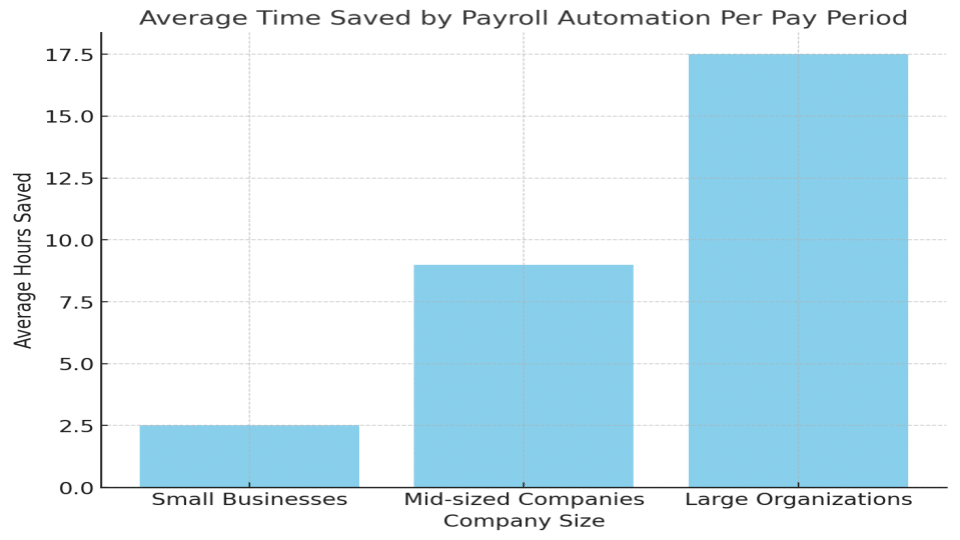
    By automating payroll processes, HR teams can significantly lighten their workload and focus on tasks that bring more value to the organization.

    Time Savings for HR Teams

    • Payroll automation frees up time for HR teams to focus on strategic activities.
    • Reduces time spent on manual tasks like data entry and payroll calculations


    Streamlined Employee Records Management

    • Payroll software integrates employee records with payroll data.
    • Ensures HR teams have accurate and up-to-date data at all times.

    Elimination of Repetitive Tasks

    • Automates repetitive tasks such as verifying worked hours and calculating benefits.
    • HR can focus on tasks that require human oversight rather than routine activities.

    Reduced Administrative Burden on HR Staff

    • Reduces the need for HR staff to manage payroll manually.
    • Alleviates stress and workload, especially during payroll cycles.

    Now that we understand how payroll automation helps reduce HR workload, let’s explore the key features in HR software that make this possible.

    Key Features of Payroll Software

    To fully capitalize on the benefits of payroll automation, it’s important to choose the right payroll software with the right features.

    Real-Time Updates and Data Accuracy

    • Data is updated in real-time, ensuring accuracy in employee pay details.
    • Changes in employee status, pay rates, or tax laws are reflected instantly.

    Integration with Other HR Solutions

    • Integrates seamlessly with other HR software (attendance, benefits, time-off management).
    • Eliminates data silos and ensures a smooth workflow.

    Employee Self-Service Options

    • Allows employees to access their pay stubs, update personal information, and request time off.
    • Reduces HR workload and empowers employees to manage payroll processing tasks.

    Automated Tax Calculations and Filing

    • Automatically calculates taxes based on the latest tax laws.
    • Simplifies tax filing by generating accurate reports for compliance.

    We’ve covered the key features of HR software, but there are also some challenges to consider. Let’s explore those next.

    Challenges and Considerations

    While payroll automation offers several benefits, it’s important to consider potential challenges during the implementation phase.

    Initial Setup and Implementation Costs

    • Payroll automation setup can be costly and time-consuming.
    • Weigh the cost of implementation against the long-term savings in time and errors.

    Training HR Teams and Employees

    • HR teams and employees may need training to adapt to the new system.
    • Payroll automation systems are typically user-friendly, ensuring quick adoption.

    Data Security and Privacy Concerns

    • Payroll automation involves storing sensitive employee data digitally.
    • Ensure the HR software has robust security measures to protect against data breaches.

    Having discussed some of the challenges, let’s look at a few real-world examples of how payroll automation has made a difference.

    Examples of Payroll Automation Success

    Real-life success stories can help illustrate how payroll automation can truly benefit businesses.

    Case Study 1: Manufacturing Sector

    • A manufacturing firm integrated leave data with payroll, resulting in a 60% reduction in payroll mistakes and freeing up 20 hours per week for the HR department. (Source)


    Case Study 2: Error reduction in businesses

    • Businesses using payroll software experience 31% fewer errors, ensuring greater accuracy in employee compensation. (Source)

    Now that we’ve seen how businesses have benefited from payroll automation, let’s conclude with some final thoughts.

    Conclusion

    Payroll automation is a game-changer for HR teams looking to improve accuracy and reduce their workload. It not only eliminates manual errors but also ensures that employees are paid on time and that the organization remains compliant with tax regulations. By automating payroll, businesses can save time, cut administrative costs, and improve employee satisfaction. Payroll automation is an investment that pays for itself over time, making it a smart choice for companies seeking to streamline HR processes and improve operational efficiency.

     If you’re looking for an HR software that simplifies payroll management and integrates seamlessly with your existing systems, Onex HRMS could be the right fit for your business. Explore how Onex HRMS can help your team save time, reduce errors, and enhance payroll accuracy today.


    7 Signs Your AP Process Is Due For An Upgrade

    As your business grows, things get more complex. More vendors to manage. More invoices to approve. More pressure on your team to keep up.If your ap process still involves manual steps, paper invoices, or long email chains for approvals, it’s probably slowing everything down.
    Late payments. Frustrated suppliers. Burned-out staff. These issues don’t just affect finance they ripple across the whole business.The good news? You don’t have to keep running AP the hard way.

    Here are seven signs your current ap process needs a serious upgrade and what you can do to change that.

    1. Your Team Looks Exhausted

    • Long hours just to stay on top of basic tasks
    • Manual data entry takes over the day
    • Mistakes increase, and morale drops

    What to do:

    • Automate invoice capture and approvals
    • Connect directly to your ERP
    • Eliminate paper and reduce repetitive work
    • AP automation reduces the manual load

    2. You’re Still Tracking Paper Invoices

    • Invoices go missing between departments
    • Approvals take too long
    • More time is spent searching than actually processing

    What to do:

    • Switch to digital invoice routing
    • Set up workflows that auto-send to the right approvers
    • Keep everything in one place no more chasing documents
    • Fixing this improves your ap process almost instantly
    • Your AP department will save hours every week.

    AP automation helps centralize and control the full invoice lifecycle.

    3. Your AP Days Outstanding Are Out of Control

    • Invoices stay unpaid for 60 to 90 days
    • Vendor relationships and cash flow take a hit
    • Overload leads to burnout and higher turnover

    What to do:

    • Time payments based on cash flow and due dates
    • Automate payments straight from your bank
    • Skip printing checks and streamline disbursement
    • These steps help stabilize your ap process
    • A struggling AP department affects everyone in the company.

    4. Vendors Keep Calling About Late Payments

    • Phone lines are busy with follow-up calls
    • Errors and delays damage vendor trust
    • Mail fraud, wrong addresses, and lost checks increase risk

    What to do:

    • Send automatic remittance notifications
    • Give vendors access to real-time payment status
    • Reduce manual updates and stop the back-and-forth
    • A transparent ap process builds better vendor relationships
    • Your AP department should never be the bottleneck.

    5. You Keep Getting Refund Checks

    • Overpayments mean your process has gaps
    • Manual errors and paying off statements cause duplicate payments
    • Valuable time is spent fixing avoidable issues

    What to do:

    • Add multi-level invoice review steps
    • Only pay against approved and matched invoices
    • Catch errors before the money leaves your account
    • A tighter ap process prevents these mistakes
    • Clean systems help your AP department focus on value, not fixes.
    • AP automation catches duplicates and flags mismatches early.

    6. Your Team Needs Magnifying Glasses

    • Paper invoices take hours to process
    • Teams deal with eye strain and avoidable stress
    • Mistakes grow as the workload piles up

    What to do:

    • Use OCR to extract invoice data automatically
    • Let the system handle coding
    • Move from manual review to one-click approvals
    • Speeding up your ap process frees up your team
    • Your AP department should have tools that actually help.
    • AP automation gives your team breathing room and clarity.

    7. You’re Worried About Fraud (or Already a Victim)

    • One-person control means high risk
    • Weak oversight opens the door to internal or external fraud
    • Financial pressure increases the temptation

    What to do:

    • Separate duties for approval and payment
    • Add 2FA, alerts, and payment limits
    • Track all actions with detailed audit trails
    • Security should be built into your ap process
    • A secure AP department protects your business at every level.

    Why It Matters?

    • Your ap process affects more than finance
    • It shapes how vendors and partners see your business
    • It impacts cash flow and overall stability
    • It affects team morale and long-term performance
    • A strong AP department supports growth without adding stress.
    • AP automation is no longer optional, it’s expected.

    Conclusion

    No one wants to deal with invoice pileups, payment delays, or constant follow-ups. And your team definitely doesn’t want to waste time on work that could be automated.
    If any of the signs we’ve covered sound familiar, it’s probably time to rethink how your ap process works and how much smoother things could run with the right tools.
    At Osource, we’ve helped companies simplify their ap process from end to end without adding extra work or complexity.Want to see if it’s a fit for your team? Talk to our expert today.

    The Ultimate Guide to Optimize General Ledger Management

    Efficient general ledger (GL) management is essential for accurate financial reporting and streamlined business operations. Whether you’re a small business or part of a larger enterprise, optimizing your general ledger process ensures that your accounting data is reliable, timely, and compliant.

    This guide will walk you through the best practices, common challenges, and technological tools to help you optimize general ledger management for your business.

    Introduction to General Ledger Management

    Understanding the basics of general ledger management is the first step toward optimizing your financial processes.

    What is General Ledger Management?

    • General ledger management involves recording, organizing, and maintaining all financial transactions within an organization.

    • It links various financial processes together, providing a clear picture of the company’s financial health.

    • The GL serves as the backbone of your accounting system.

    Importance of General Ledger in Financial Accounting

    • Consolidates data from various sub-ledgers (accounts payable, accounts receivable, etc.).

    • Generates crucial financial reports like balance sheets, income statements, and cash flow statements.

    • Ensures compliance with accounting standards.

    • Supports audits and assists in decision-making.

    Key Components of a General Ledger

    • Chart of Accounts: Lists all accounts used in your general ledger.

    • Journal Entries: Record all financial transactions in the appropriate accounts.

    • Trial Balance: Summarizes account balances and ensures they are balanced.

    Having covered the basics, let’s dive into some of the challenges that businesses face when managing their general ledger.

    Challenges in General Ledger Management

    Manual processes and complex operations can make managing your general ledger more difficult, leading to errors and inefficiencies.

    Common Issues in Manual Ledger Processes

    • Prone to errors and inefficiencies.

    Data entry mistakes can cause discrepancies.

    • Data entry mistakes can cause discrepancies.

    • Manual processes lead to delays in financial reporting.

    • Duplicated entries can distort financial data.

    Impact of Inaccurate Ledger Management

    • Leads to misleading financial reports.

    • May cause compliance issues and missed deadlines for tax filings.

    • Reduces stakeholder trust and creates operational challenges.

    The Complexity of Multi-Entity and Multi-Currency Ledgers

    • Managing ledgers across different currencies and entities adds complexity.

    • Reconciling intercompany transactions can be time-consuming.

    • Currency conversions must be accurate to avoid discrepancies.

    Now that we’ve discussed the challenges, let’s move on to the best practices that will help you optimize your general ledger management.

    Best Practices to Optimize General Ledger Management

    Optimizing your general ledger process involves implementing specific practices to improve efficiency and accuracy.

    Implementing Automation in Accounting

    • Automates routine tasks such as data entry, reconciliation, and reporting.

    • Minimizes human error and improves operational efficiency.

    • Accelerates financial processes and reduces delays.

    Standardizing Chart of Accounts

    • Helps in organizing financial data consistently across departments.

    • Ensures proper categorization of transactions.

    • Streamlines reporting and simplifies audits.

    Regular Reconciliation and Review

    • Frequent reconciliation helps maintain an accurate general ledger.

    • Identifies discrepancies early to prevent significant issues.

    • Regular reviews ensure accounts balance and financial reports are accurate.

    Adopting Real-Time Data and Analytics

    • Real-time data ensures up-to-date financial reports.

    • Analytics tools provide insights into spending trends, revenue generation, and cash flow.

    • Improves decision-making by offering current, accurate data.

    With best practices in place, let’s explore how technology can make a significant difference in general ledger management.

    Leveraging Technology for Efficient General Ledger Management

    Using technology can make managing your general ledger faster, more accurate, and less prone to errors.

    Benefits of Cloud-Based General Ledger Systems

    • Accessibility: Access financial data from anywhere.

    • Scalability: Easily grow the system as the business expands.

    • Security: Cloud providers offer strong data protection and backup systems.

    Integrating General Ledger with Other Financial Tools

    • Ensures seamless data flow across various financial systems.

    • Reduces manual data entry and errors.

    • Speeds up financial reporting by integrating systems like accounts payable and receivable.

    Artificial Intelligence and Machine Learning in Ledger Management

    • AI can automate tasks such as transaction categorization, anomaly detection, and forecasting.

    • Machine learning identifies potential errors and offers predictive insights.

    • Improves accuracy and decision-making processes.

    Now that we’ve examined the role of technology, let’s turn our attention to key metrics for evaluating general ledger performance.

    Key Metrics for Evaluating General Ledger Performance

    Tracking the right metrics helps you gauge the effectiveness of your general ledger management system.

    Accuracy and Completeness of Entries

    • Ensure journal entries are accurate and complete to avoid discrepancies.

    Inaccurate entries can distort your financial data and reports.

    Timeliness of Reconciliation

    • Quick reconciliation helps generate timely financial reports.

    • Delays in reconciliation may result in outdated financial data and poor decision-making.

    Audit Trail and Compliance Tracking

    • Maintain a record of all journal entries and changes for compliance.

    • Audit trails help ensure that every modification is documented and transparent.

    Having covered the key metrics, let’s now look ahead at the future of general ledger management.

    The Future of General Ledger Management

    Emerging technologies are set to transform how general ledger management is handled, offering more efficiency and security.

    Role of Blockchain Technology in Ledger Management

    • Blockchain provides a transparent and immutable way to record transactions.

    • Offers a secure and auditable record of every financial transaction.

    • Could revolutionize general ledger management in the future.

    Increasing Automation in Accounting and AI Adoption

    • More businesses will turn to automation in accounting and AI for greater accuracy.

    • AI will assist in handling complex tasks and enhancing decision-making processes.

    • Reduces the need for human intervention in routine tasks.

    The Shift Towards Real-Time Financial Reporting

    • Real-time financial reporting will become more common.

    • Businesses can access up-to-the-minute data, enabling timely decision-making.

    • Helps companies act quickly in dynamic business environments.

    Now that we’ve explored the future trends, let’s conclude by summarizing the key takeaways and next steps.

    Conclusion and Key Takeaways

    Optimizing general ledger management is crucial for businesses aiming to maintain financial accuracy, reduce errors, and ensure compliance. A well-structured and efficient general ledger system not only simplifies audits and financial reporting but also enhances decision-making and helps you stay compliant with accounting standards. With automation in accounting, routine tasks, standardizing the chart of accounts, and regularly reconciling accounts, you can reduce manual errors and improve overall efficiency. Additionally, leveraging modern technology, such as cloud-based systems and AI-powered tools, can further streamline processes, making financial data more accessible and actionable in real-time. With these steps in place, you can ensure that your general ledger management system supports the growth and stability of your business while minimizing risks associated with financial inaccuracies.

    Unit No. 4, 5th Floor, B Wing, Phoenix House, High Street Phoenix, 462 S.B. Marg, Lower Parel (w) Mumbai - 400 013. India.

      How can we help?

      Finance And Accounting Services

      Human Resource Services

      B2B SaaS Solution

      Customize Solutions

      Your Details

      Name*

      Email*

      Phone number*

      Organization*

      Location*

      Select Enquiry Type*

      How can we help?*

      What is 3 + 9 ?

      By clicking submit you agree with the Privacy policy of Osource